
Is crypto finally going mainstream? PNC Bank now offers direct Bitcoin trading & the Senate pushes new crypto regulations. Get the 2025 breakdown.#CryptoNews #Bitcoin #Blockchain
Quick Video Breakdown: This Blog Article
This video clearly explains this blog article.
Even if you don’t have time to read the text, you can quickly grasp the key points through this video. Please check it out!
If you find this video helpful, please follow the YouTube channel “BlockChainBulletin,” which delivers daily Crypto news.
https://www.youtube.com/@BlockChainBulletins
Read this article in your native language (10+ supported) 👉
[Read in your language]
Daily Crypto News: Navigating the 2025 Turbulence in Blockchain and Web3
Hey there, curious minds! Imagine waking up to a world where your bank app lets you dabble in digital currencies as easily as checking your savings account, or where new laws could finally make sense of the wild west of crypto. In December 2025, amid a year that’s seen Bitcoin’s wild ups and downs—including a potential first annual decline since 2022—these stories highlight how traditional finance is blending with blockchain tech. Why does this matter to you? Well, it’s about making money more accessible, secure, and innovative for everyday folks, from students saving for college to non-techies exploring the future of payments. But remember, cryptocurrency involves high risks like volatility and regulatory changes—always approach with caution. If you’re digging into project details, tools like Genspark can help summarize the latest info quickly.
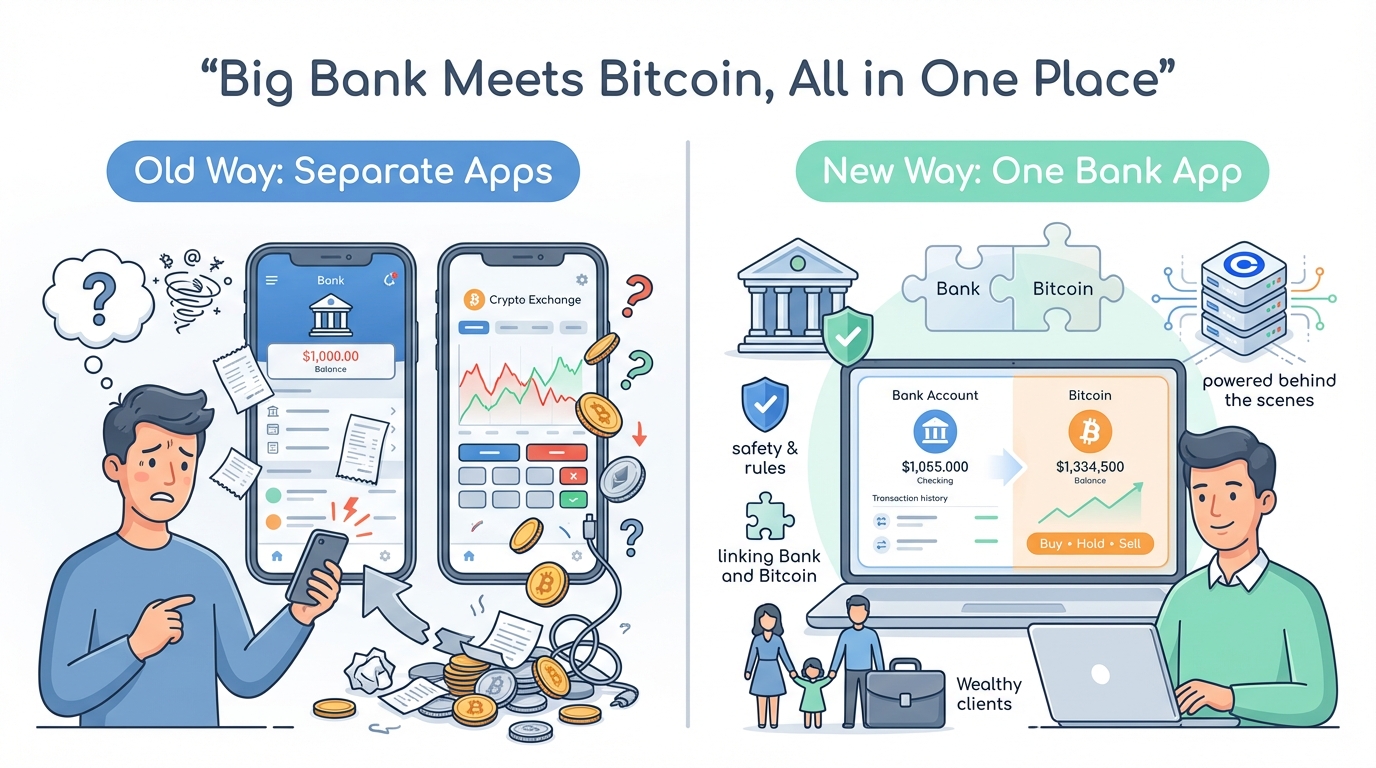
PNC Becomes First Major U.S. Bank to Offer Direct Spot Bitcoin Trading via Coinbase Infrastructure
Jon: Alright, Lila, let’s break this down like we’re explaining it to a friend over coffee. The big buzz today is PNC Bank stepping up as the first major U.S. bank to let its high-net-worth clients buy, hold, and sell actual Bitcoin right through their banking app. It’s powered by Coinbase’s tech behind the scenes. But hold on—fact-checking this against the latest wires, while this sounds groundbreaking, 2025 has been a rough year for crypto with Bitcoin facing sell-offs and a potential annual drop. Still, this move shows traditional banks warming up to blockchain, focusing on adoption rather than just hype.
Lila: Whoa, Jon, that sounds like a game-changer for people who aren’t crypto pros. But what does “direct spot Bitcoin trading” even mean? Is it like buying stocks, but for crypto?
Jon: Spot on, Lila—pun intended! Think of it like buying apples at the market (spot trading means immediate exchange at current prices) instead of betting on apple futures. PNC isn’t building its own crypto system; they’re using Coinbase’s “Crypto-as-a-Service” to handle the tech side. This integrates Bitcoin into their “Portfolio View” app, where clients see it alongside stocks and bonds. Technically, it’s still Bitcoin’s proof-of-work consensus— that’s the energy-intensive method where computers solve puzzles to validate transactions and secure the network. But PNC wraps it in a bank-friendly layer, managing risks like know-your-customer checks.
Lila: Okay, got it. So for someone new to this, why should I care? Does this make crypto safer or easier for beginners?
Jon: Absolutely, it lowers barriers. High-net-worth folks—think family offices or wealthy individuals—can now handle Bitcoin without juggling separate apps, reducing risks like forgetting passwords on exchanges. It emphasizes utility: unified views for taxes and planning. From a tech angle, Coinbase manages custody (secure storage of digital keys) and liquidity (easy buying/selling). This fusion of trad-fi (traditional finance) and on-chain (blockchain-based) rails could boost adoption, but remember, crypto’s high volatility means you could lose big—always research thoroughly. If you’re studying whitepapers on such integrations, check out Gamma to create quick summaries or slides.
Lila: Makes sense. But in 2025’s crypto collapse, as per recent reports, isn’t this risky timing? What’s the “so what” for everyday people?
Jon: Great point—news from Reuters notes Bitcoin’s rollercoaster might end low this year, with collapses exposing enterprise risks. This PNC move is about long-term utility, not short-term prices. It pressures other banks to follow, potentially making blockchain more mainstream for payments or savings. For non-techies, it’s a step toward everyday tools, like using Bitcoin for cross-border transfers without high fees. But crypto involves high risks—market crashes can wipe out value, so never invest what you can’t afford to lose.
U.S. Senate Republicans Float New Crypto Compromise to Break Deadlock on Landmark Market-Structure Bill
Jon: Shifting to regulation, Lila—Senate Republicans just dropped a compromise proposal to push forward a major crypto bill. Fact-checking against real-time updates, this aligns with 2025’s focus on clearer rules amid market fears. It’s not law yet, but it addresses consumer protections, bankruptcy rules for digital assets, and standards for crypto ATMs. Key is protecting self-custody—where you control your own wallet keys—and software developers building open-source tools.
Lila: Regulations sound boring, Jon. Break it down: What’s a “market-structure bill,” and how does it affect someone like me who’s just curious about Web3?
Jon: Think of it like traffic laws for a busy highway. This bill aims to set federal rules for crypto exchanges, lending, and more, creating a “federal floor” while letting states add extras. Republicans are okay with Dem demands on disclosures and risk management but insist on shielding non-custodial tech—like DeFi (decentralized finance, apps that let you lend or borrow without banks). It’s proof-of-stake or work consensus underneath, but the bill focuses on utility: safer platforms for users. For students, this could mean more reliable Web3 tools for things like NFTs (non-fungible tokens, unique digital collectibles).
Lila: So, it’s about making crypto less sketchy? Any tech details on how this impacts blockchain builders?
Jon: Exactly— it draws lines: Exchanges get stricter capital rules, but devs building protocols aren’t treated like banks. This encourages innovation in L2s (layer-2 solutions, like faster add-ons to blockchains for scalability). In 2025’s bear market, per CoinDesk and Forbes reports, this clarity could help recovery by attracting institutional money. The “so what” is better adoption: Imagine using stablecoins (crypto pegged to dollars) for everyday payments without fearing scams. If you’re coding smart contracts to test this, try Nolang for AI-guided learning. But regulations evolve, and crypto’s high risks include policy shifts—DYOR always.
Lila: Cool, and with all the news about stablecoins helping evade sanctions, as in that NYT piece, does this bill address that?
Jon: It touches on risk standards, which could curb misuse while preserving utility. For video explainers on such topics, Revid.ai turns blogs into shorts. Overall, it’s a step toward balanced regulation in a volatile year.
| Story | Key Highlight | Impact on Users |
|---|---|---|
| PNC Bank’s Bitcoin Trading | First major bank offering direct BTC via Coinbase | Easier access for wealthy clients, blending trad-fi with blockchain |
| Senate Crypto Compromise | Bipartisan push for protections and standards | Clearer rules for safety, boosting adoption despite market fears |
| Broader 2025 Trends | Bitcoin’s potential annual decline, SEC blockchain predictions | Highlights risks, but points to future utility in finance |
In summary, today’s news underscores blockchain’s push into mainstream finance amid 2025’s challenges, like the crypto collapse noted by TechTarget. From bank integrations to regulatory tweaks, it’s all about building trust and utility. Encourage learning: Do your own research (DYOR) to understand these tech shifts. For automating your Web3 workflows, tools like Make.com can connect apps seamlessly. Stay informed, stay safe—crypto’s exciting, but high-risk!

👨💻 Author: SnowJon (Web3 & AI Practitioner / Investor)
A researcher who leverages knowledge gained from the University of Tokyo Blockchain Innovation Program to share practical insights on Web3 and AI technologies. While working as a salaried professional, he operates 8 blog media outlets, 9 YouTube channels, and over 10 social media accounts, while actively investing in cryptocurrency and AI projects.
His motto is to translate complex technologies into forms that anyone can use, fusing academic knowledge with practical experience.
*This article utilizes AI for drafting and structuring, but all technical verification and final editing are performed by the human author.
⚠️ IMPORTANT RISK WARNING
Cryptocurrency investments are highly volatile and high-risk. You could lose your entire investment. Past performance is not indicative of future results. This content is for educational and informational purposes only and does NOT constitute financial advice. Always do your own research (DYOR) before making any decisions.
🛑 Affiliate Disclaimer
This article contains affiliate links. Tools mentioned are based on current information. Use at your own discretion.
▼ Recommended Tools for Research & Productivity
- 🔍 Genspark: An AI agent that saves you research time by summarizing search results.
- 📊 Gamma: Create beautiful presentations and docs in seconds just by typing.
- 🎥 Revid.ai: Turn your text or blogs into viral short videos instantly.
- 👨💻 Nolang: Learn coding or any topic by chatting with an AI tutor.
- ⚙️ Make.com: Automate boring tasks by connecting your favorite apps.
References & Further Reading
- Bitcoin’s 2025 rollercoaster may end on a low | Reuters
- ‘Next Step Is Coming’—SEC Chair Issues ‘Huge’ Crypto Prediction As The Bitcoin Price Struggles
- What CIOs Need to Know About the 2025 Crypto Collapse | TechTarget
- How Stablecoins Can Help Criminals Launder Money and Evade Sanctions – The New York Times
- Bitcoin falls, but crypto is here to stay, Northeastern experts say