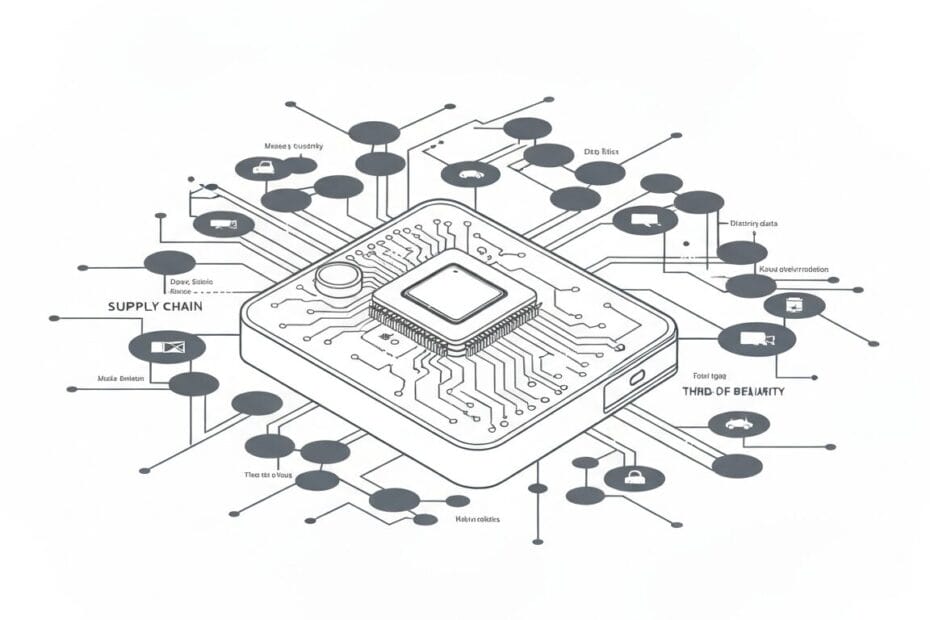
Personally the Ledger breach shows how third-party vendors remain a critical weak point#cybersecurity #privacy
Quick Video Breakdown: This Blog Article
This video clearly explains this blog article.
Even if you don’t have time to read the text, you can quickly grasp the key points through this video. Please check it out!
If you find this video helpful, please follow the YouTube channel “BlockChainBulletin,” which delivers daily Crypto news.
https://www.youtube.com/@BlockChainBulletins
Read this article in your native language (10+ supported) 👉
[Read in your language]
New Ledger Breach Didn’t Steal Your Crypto, But It Exposed Info That Leads Violent Criminals to Your Door
Jon: Hey Lila, have you seen the latest on Ledger? Another data breach, but this time through their third-party payment processor, Global-e. It’s not about stolen crypto—wallets are safe—but personal info like names, emails, and shipping addresses got exposed. Published just a couple of days ago on CryptoSlate, dated around January 5, 2026. Scary stuff, especially since Ledger’s had breaches before, like the big one in 2020 that affected over 270,000 customers.
Lila: Whoa, Jon, that sounds alarming. I use a hardware wallet myself. So, no crypto was taken, but personal details leaked? Why does this matter so much?
Jon: Exactly. In the crypto world, anonymity is key for many, but when you buy hardware like a Ledger device, you’re sharing real-world info for shipping. This breach exposed that data, potentially putting users at physical risk. Think about it: bad actors could use addresses to target people, knowing they hold crypto. It’s not hypothetical—after the 2020 breach, there were reports of phishing and even home invasions. Ledger confirmed this one impacted some customers, warning about increased phishing attempts. The key stat here? Similar to past incidents, but this time it’s tied to a third-party vendor, highlighting supply chain vulnerabilities.
Lila: Okay, that makes sense. But let’s break it down—why is this a bigger deal than just a regular data leak?
Jon: The problem boils down to trust in the ecosystem. Ledger makes hardware wallets that keep your private keys offline, which is great for security against hacks. But when you order one, you’re involving e-commerce partners like Global-e for payments and fulfillment. Hackers breached Global-e’s systems, not Ledger’s directly, exposing order data. It’s a classic third-party risk—your data is only as secure as the weakest link in the chain.
Lila: Third-party risk? Can you explain that with an analogy? I’m picturing something everyday.
Jon: Sure, think of it like ordering takeout. You trust the restaurant (Ledger) to make your food safely, but they use a delivery service (Global-e) to get it to your door. If the delivery guy’s bag gets stolen en route, your address and order details are out there, even if the restaurant itself is secure. In crypto, that “address” could literally lead thieves to your home, especially if they suspect you have valuables like hardware wallets full of assets. The breach didn’t touch crypto holdings, but it erodes privacy, which is crypto’s foundation. Reports from sources like BleepingComputer and CoinDesk confirm hackers accessed customer names, emails, phone numbers, and physical addresses from recent orders.
Lila: Got it—that analogy clicks. So, the structural issue is relying on external partners?
Jon: Precisely. In Web3, decentralization is the ideal, but real-world operations often involve centralized chokepoints. Ledger’s architecture is solid for key storage—using secure elements like chips in their devices to isolate private keys. But the supply chain for selling and shipping introduces vulnerabilities. This incident, flagged by blockchain researcher ZachXBT, shows how even reputable companies can have breaches that cascade to users.
Under the Hood: How it Works
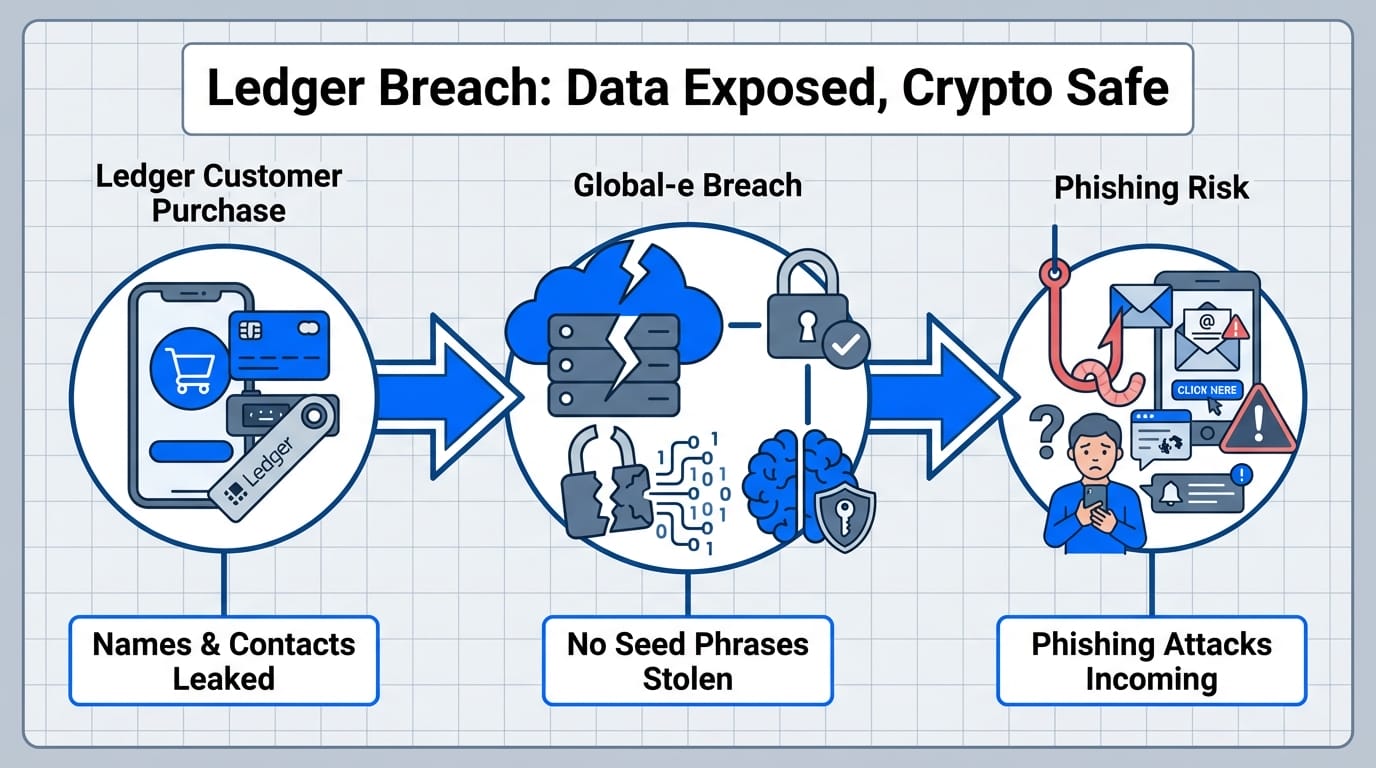
Jon: Alright, let’s dive into the mechanics. The diagram above illustrates Ledger’s ecosystem—hardware wallet at the core, connected to e-commerce flows. Essentially, Ledger devices use a secure chip to generate and store private keys offline. When you buy one, your order goes through their site, processed by Global-e for payments and logistics. The breach happened at Global-e, where hackers exploited a vulnerability, likely in their databases, to extract customer data.
Lila: So, under the hood, it’s not Ledger’s fault directly? But how does the data flow work?
Jon: Right. Ledger’s core tech is the hardware: a device like the Nano S or X that uses a secure element—think a tamper-resistant chip, similar to those in credit cards—to handle elliptic curve cryptography for signing transactions. Your seed phrase never leaves the device. But for sales, data flows like this: You enter details on Ledger’s site, which forwards to Global-e for processing. Global-e handles payment gateways, shipping labels, etc. The hack exposed that intermediary data, not the wallet seeds.
Lila: Elliptic curve cryptography? Simplify that for me.
Jon: It’s the math behind secure key pairs in crypto—efficient for small devices. Think of it as a lock that only your key can open, based on complex curves. Anyway, to compare this to past incidents, let’s look at a table.
| Aspect | 2020 Ledger Breach | 2026 Global-e Breach |
|---|---|---|
| Scope | Over 270,000 customers’ emails and some addresses leaked directly from Ledger’s marketing database. | Subset of recent orders; names, emails, phones, addresses via third-party processor. |
| Cause | API vulnerability in Ledger’s own systems. | Hack on Global-e’s infrastructure; supply chain attack. |
| Impact | Mass phishing, some physical threats reported. | Renewed phishing risks; potential for targeted scams or visits. |
| Response | Ledger improved internal security and notifications. | Ledger alerting affected users, emphasizing no wallet compromise. |
Jon: As you see, patterns repeat, but the third-party element adds complexity. Ledger’s token mechanics aren’t directly involved here—they don’t have a native token—but understanding this helps in grasping hardware wallet security overall.
Lila: That table really clarifies the differences. So who actually uses this? I mean, beyond just buying a Ledger, what are the broader applications?
Jon: Hardware wallets like Ledger are used by anyone serious about crypto security—developers building dApps, traders holding long-term, even institutions managing cold storage. Technically, they enable secure transaction signing without exposing keys to the internet. Use cases include DeFi participation, where you connect the wallet to apps like Uniswap via WalletConnect, or NFT management. The benefit is risk reduction: your assets stay offline until you approve. For users, it’s about peace of mind; for devs, it’s integrating secure hardware into protocols.
Lila: Makes sense. But with breaches like this, how do people apply this knowledge safely?
Jon: Let’s talk action plan. Start with Level 1: Research and observation. Read Ledger’s official security blog or whitepapers on their site. Use blockchain explorers like Etherscan to verify transactions without risking real funds. Check dashboards on sites like DefiLlama for ecosystem health, but focus on understanding vulnerabilities—look up past breaches on sources like BleepingComputer.
Lila: Okay, that’s beginner-friendly. What about hands-on? How to try safely?
Jon: Level 2: Testnet experimentation. Set up a Ledger device with testnet coins—Ethereum‘s Sepolia testnet, for example. Practice sending transactions, recovering wallets from seed phrases in a safe environment. Use open-source tools like Ledger Live app to simulate real use without real value at stake. Emphasize: always enable passphrase features for extra security layers, and never share your seed phrase. This builds muscle memory without exposure.
Lila: Solid advice. Wrapping up, what’s the outlook?
Jon: This breach highlights ongoing challenges in crypto security—hardware is robust, but human elements like data handling remain weak. Opportunities lie in better privacy tech, like zero-knowledge proofs for anonymous shipping. Limitations? Third-party risks persist, and users must stay vigilant.
Lila: True, and remember, crypto is volatile—do your own research, understand the uncertainties.
Jon: Absolutely. Stay informed, stay safe.
References
- New Ledger breach didn’t steal your crypto, but it exposed info that leads violent criminals to your door
- Official Ledger Website
- Ledger customers impacted by third-party Global-e data breach – BleepingComputer
- Crypto wallet firm Ledger faces new data breach through Global-e partner – CoinDesk