
In my view, the latest crypto news points toward stronger digital infrastructure.#Blockchain #Technology
Quick Video Breakdown: This Blog Article
This video clearly explains this blog article.
Even if you don’t have time to read the text, you can quickly grasp the key points through this video. Please check it out!
If you find this video helpful, please follow the YouTube channel “BlockChainBulletin,” which delivers daily Crypto news.
https://www.youtube.com/@BlockChainBulletins
Read this article in your native language (10+ supported) 👉
[Read in your language]
Understanding Today’s Crypto News: Implications for Technology and Regulation in 2026
Jon: Today’s crypto news highlights ongoing developments in blockchain technology and market dynamics, which could influence digital infrastructure and regulatory frameworks. For instance, predictions about Bitcoin‘s performance underscore its role in decentralized finance, while surges in other tokens like XRP point to advancements in payment systems. These stories matter for society because they touch on how blockchains might improve cross-border transactions and economic resilience, but remember, cryptocurrency involves significant risks and uncertainty.
Lila: That sounds interesting, Jon. As someone new to this, I’m curious—why focus on tech and regulation instead of just prices? And how do these changes affect everyday users?
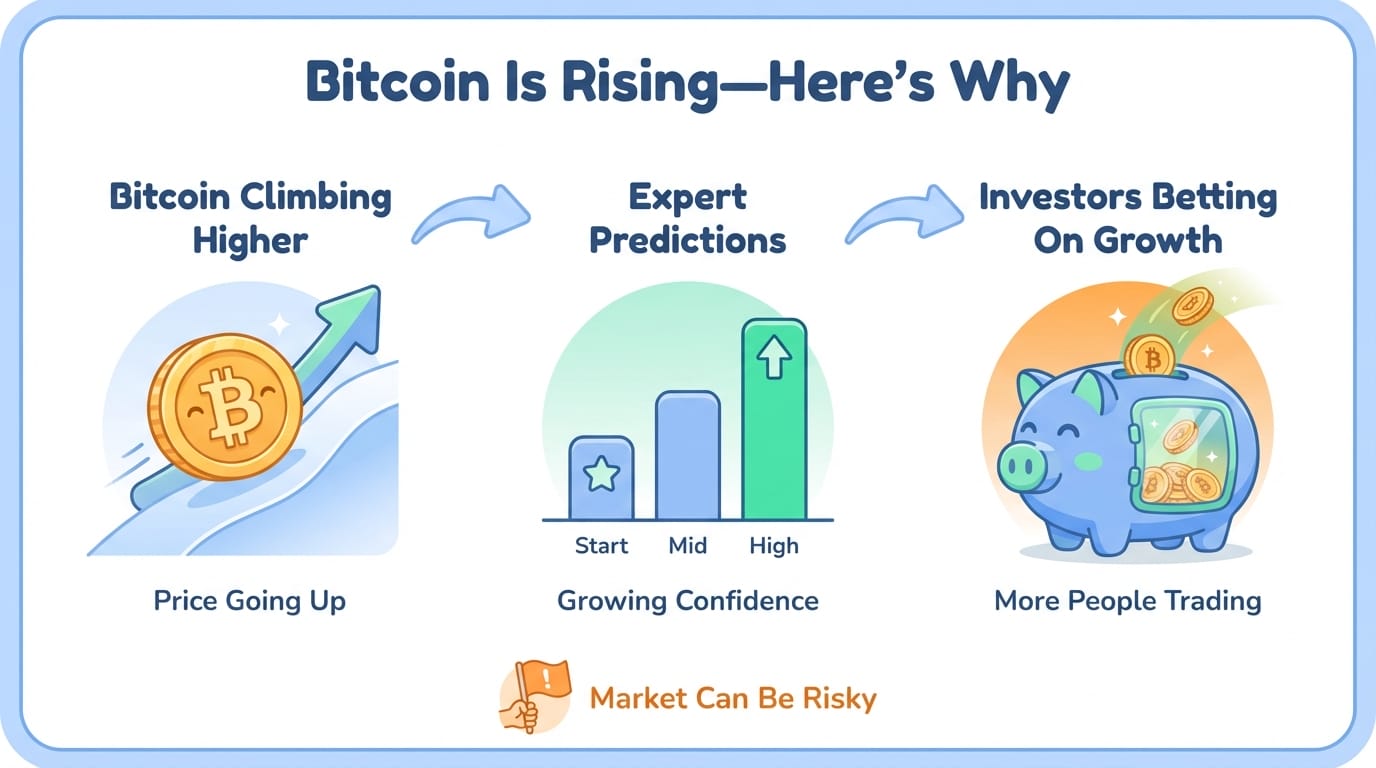
Tom Lee Predicts Bitcoin New All-Time High by End of January 2026 Amid Volatility Warning
Jon: Let’s start with this story. Tom Lee from Fundstrat Global Advisors has predicted that Bitcoin could reach a new all-time high by the end of January 2026. This is based on recent market movements and factors like institutional interest. Bitcoin uses a proof-of-work consensus mechanism, where miners solve complex puzzles to validate transactions and add blocks to the chain, securing the network through computational power. It’s a layer-1 blockchain, meaning it’s the base layer where core operations happen. The supply is capped at 21 million coins, with the most recent halving in 2024 reducing new block rewards to 3.125 BTC, which helps maintain scarcity.
Lila: Proof-of-work sounds energy-intensive. How does that compare to other systems, and what does this prediction mean for regulation?
Jon: You’re right—proof-of-work requires a lot of electricity for security, unlike proof-of-stake, which Ethereum switched to in 2022 via The Merge to reduce energy use. Ethereum selects validators based on staked coins rather than computing power. For governance, Bitcoin’s changes happen through community consensus, often via proposals like BIPs (Bitcoin Improvement Proposals). This prediction highlights potential volatility in 2026, with warnings of 20-30% drawdowns due to factors like Federal Reserve policies or regulations. For users, it could mean more attention to Bitcoin as a digital store of value, but developers might focus on building layer-2 solutions like the Lightning Network for faster transactions. Societally, it raises questions about energy consumption and the need for clearer regulations on crypto as an asset class.
Lila: So, in simple terms, this doesn’t change Bitcoin’s core tech, but it might push for better infrastructure? What risks should people know?
Jon: Exactly. It doesn’t alter the protocol, but it could encourage adoption if regulations evolve favorably. Risks include market volatility and regulatory clampdowns—always remember, crypto is uncertain. Important: Bitcoin’s hash rate is over 600 EH/s, ensuring network security. This changes things by potentially increasing institutional inflows, benefiting developers building on Bitcoin, but users should prioritize understanding the tech over speculation.
XRP Leads Crypto Surge with 9% Gain as Bitcoin Eyes $95,000
Jon: Moving on, XRP saw a 9% increase, leading the market while Bitcoin approached $95,000. XRP runs on the XRP Ledger, which uses a federated consensus protocol—not proof-of-work or proof-of-stake, but a system where trusted validators agree on transactions quickly. It’s designed for high speed, handling up to 1,500 transactions per second (TPS) with finality in under 5 seconds, making it suitable for cross-border payments. The XRP Ledger is a layer-1 chain with a total supply of 100 billion tokens, of which about 55 billion are circulating, managed through escrow releases for predictability.
Lila: Federated consensus? Can you explain that like it’s a group decision?
Jon: Think of it as a committee of trusted members voting to confirm deals, unlike Bitcoin’s open mining competition. Governance for XRP involves Ripple Labs and a network of over 150 validators, promoting decentralization. This surge comes amid regulatory clarity after the SEC lawsuit resolution, which could boost its use in institutional remittances. Compared to Stellar (XLM), which has a similar focus but lower liquidity, XRP’s daily volume is around $3 billion. For users, this might mean faster, cheaper international transfers; developers could build more payment apps on it. Societally, it highlights blockchain’s potential for efficient global finance, but with risks like dependency on oracles for external data.
Lila: So what does this change? Is it safer now with better regulation?
Jon: It could lead to more adoption in finance, changing how banks handle cross-border flows. However, if Bitcoin’s dominance rises, it might squeeze XRP’s liquidity. Important: Regulatory progress positions XRP for real-world utility, but crypto remains risky. Users and developers benefit from enhanced DeFi (decentralized finance, which is lending and trading without banks) on XRP, with TVL at $120 million, but always approach with caution.
Bitcoin Traders Position for $100,000 Rally Kicking Off 2026
Jon: In this update, traders are betting on Bitcoin surpassing $100,000 soon, using derivatives like perpetual futures on exchanges. Bitcoin’s consensus is proof-of-work, as we discussed, on its layer-1 chain. This positioning reflects confidence in its security model, with low transaction fees currently at 5 satoshis per virtual byte amid rising activity. The Lightning Network, a layer-2 scaling solution built on Bitcoin, allows for potentially 1 million TPS by batching transactions off-chain.
Lila: Layer-2? That’s like an add-on layer for speed?
Jon: Yes, exactly—layer-2s like Optimism on Ethereum or Lightning on Bitcoin handle transactions separately and settle back to the main chain for security. Governance for Bitcoin is decentralized, with no central authority. This trader activity mirrors past rallies driven by ETF (exchange-traded fund) inflows, contrasting with high-throughput chains like Solana, which uses proof-of-history for 65,000 TPS focused on DeFi. Impacts include potential volatility from liquidations if prices dip, but the hash rate at 620 EH/s protects against attacks. For users, it might mean more tools for secure storage; developers could innovate on scaling. Societally, it underscores crypto’s role in finance, but with significant uncertainty.
Lila: Does this change anything for regular people or just traders?
Jon: It could accelerate adoption of Bitcoin tech in payments, but risks like crowded trades leading to sharp drops remain. Important: Positive funding rates signal optimism, but volatility is inherent. This changes the landscape by highlighting Bitcoin’s resilience, benefiting society through potential economic tools, but always research independently.
Q4 2025 Slump Sets Stage for Bitcoin and Ethereum Recovery
Jon: Finally, the fourth quarter of 2025 saw a downturn for Bitcoin and Ethereum, with reduced inflows and macro challenges. Ethereum uses proof-of-stake, where validators stake ETH to participate in consensus, aiming for energy efficiency. It’s a layer-1 chain with about 120 million ETH in supply, featuring EIP-1559 which burns fees to make it deflationary, though issuance keeps inflation at around 0.5%. Layer-2 rollups like Optimism handle 70% of activity to scale.
Lila: Staking is like putting money down to vote on transactions?
Jon: Precisely—it’s less energy-intensive than mining. Governance involves Ethereum Improvement Proposals (EIPs) and community decisions. This slump preceded the current rebound, testing resilience. Compared to Bitcoin’s fixed issuance, Ethereum focuses on smart contracts (self-executing code). Impacts include pressure on TVL (total value locked in protocols) at $90 billion for Ethereum’s ecosystem. For users, it might mean more stable DeFi options post-recovery; developers could refine layer-2s. Societally, it shows blockchain’s volatility, calling for better regulations.
Lila: So, what does this mean for the future of these networks?
Jon: It sets the stage for potential growth in adoption, but correlated risks persist. Important: Recovery depends on regulatory clarity and tech upgrades. This changes things by emphasizing the need for robust infrastructure, benefiting users through improved utilities, but crypto is highly uncertain.
| News Topic | Key Impact | Relevance to Users/Developers/Society |
|---|---|---|
| Tom Lee Bitcoin Prediction | Highlights volatility and institutional interest in proof-of-work tech. | Encourages focus on regulation and infrastructure for secure digital assets. |
| XRP Surge | Boosts payment utility via federated consensus. | Improves cross-border efficiency, with regulatory implications for finance. |
| Bitcoin Trader Positioning | Increases focus on layer-2 scaling and security. | Drives innovation in transaction speed and economic tools. |
| Q4 2025 Slump and Recovery | Tests proof-of-stake resilience and layer-2 adoption. | Emphasizes need for stable DeFi and governance in volatile environments. |
Jon: Overall, these stories point to a trend of recovery and innovation in blockchain tech, with implications for more resilient digital infrastructure and evolving regulations in 2026.
Lila: Thanks, Jon. It’s clear crypto is complex with real risks—people should learn more and stay informed about laws, doing their own research without rushing into anything.
👨💻 Author: SnowJon
A researcher sharing practical insights on Web3 and AI based on academic study and real-world observation.
His focus is on translating complex technologies into clear, responsible explanations for a general audience.
*AI tools may assist drafting, but all factual verification and editorial judgment are performed by the author.*
⚠️ Risk & Education Notice
Cryptocurrency and blockchain technologies involve legal, technical, and financial risks.
This article is provided strictly for educational and informational purposes and does not constitute financial advice.
Readers are encouraged to conduct independent research and comply with local laws and regulations.