
Did you hear about Canton CC’s 40% surge? Discover how this privacy-focused network is transforming institutional finance with RWA tokenization.
—#CantonNetwork #RWATokenization #PrivacyCoin
—
Quick Video Breakdown: This Blog Article
This video clearly explains this blog article.
Even if you don’t have time to read the text, you can quickly grasp the key points through this video. Please check it out!
If you find this video helpful, please follow the YouTube channel “BlockChainBulletin,” which delivers daily Crypto news.
https://www.youtube.com/@BlockChainBulletins
Read this article in your native language (10+ supported) 👉
[Read in your language]
Canton Leads Daily Crypto Gainers as Trading Activity Picks Up
Jon: Hey Lila, have you seen the latest buzz in the crypto markets? Canton’s CC token is making waves, leading the daily gainers with a surge of up to 40% this week, according to recent reports. Trading activity is picking up, driven by factors like institutional adoption and partnerships in real-world asset tokenization. It’s not just hype—there’s some solid tech underpinning this.
Lila: Interesting, Jon. I’ve heard of Canton but haven’t dived deep. A 40% jump sounds impressive, especially with the overall market being range-bound around Christmas. Why does this matter?
Jon: It matters because Canton isn’t your average meme coin riding on speculation. It’s a privacy-focused network designed for institutional use cases, like tokenizing assets in a secure, compliant way. Recent news highlights its partnership with the DTCC—that’s the Depository Trust and Clearing Corporation, a big player in traditional finance—and rising on-chain activity. This could signal broader adoption of blockchain for real-world assets (RWAs), where privacy and interoperability are key. But remember, crypto markets are volatile; these gains can reverse quickly.
Lila: Got it. So it’s more about the underlying tech than just price pumps. But let’s break this down—what problem is Canton actually solving in the blockchain space?
Jon: Exactly. The core issue here is privacy and connectivity in financial networks. Traditional blockchains like Ethereum are great for transparency, but that’s a double-edged sword. In institutional settings, you don’t want every transaction visible to the world—think banks handling sensitive trades. It’s like having all your company’s financial ledgers posted on a public billboard; useful for audits, but disastrous for confidentiality.
Lila: That makes sense. So, privacy is the big hurdle? Can you give a real-world analogy to make it clearer?
Jon: Sure. Imagine a busy highway system where every car’s license plate, destination, and cargo is broadcast to everyone else on the road. That’s efficient for traffic management, but if you’re a delivery truck carrying proprietary goods, you’d rather keep that info private to avoid competitors snooping. Canton acts like a network of private tunnels connecting these highways, allowing secure, permissioned travel without exposing details to the public. It uses distributed ledger technology to synchronize data across institutions while keeping sensitive info encrypted and isolated.
Lila: Ah, the tunnel analogy helps. So it’s not about hiding illegal stuff, but enabling big players to use blockchain without sacrificing privacy?
Jon: Precisely. And that’s where the recent price action ties in—news of Canton’s growth in RWAs and AI-driven markets is drawing attention, but the real value is in solving this interoperability-privacy puzzle for enterprises.
Under the Hood: How it Works
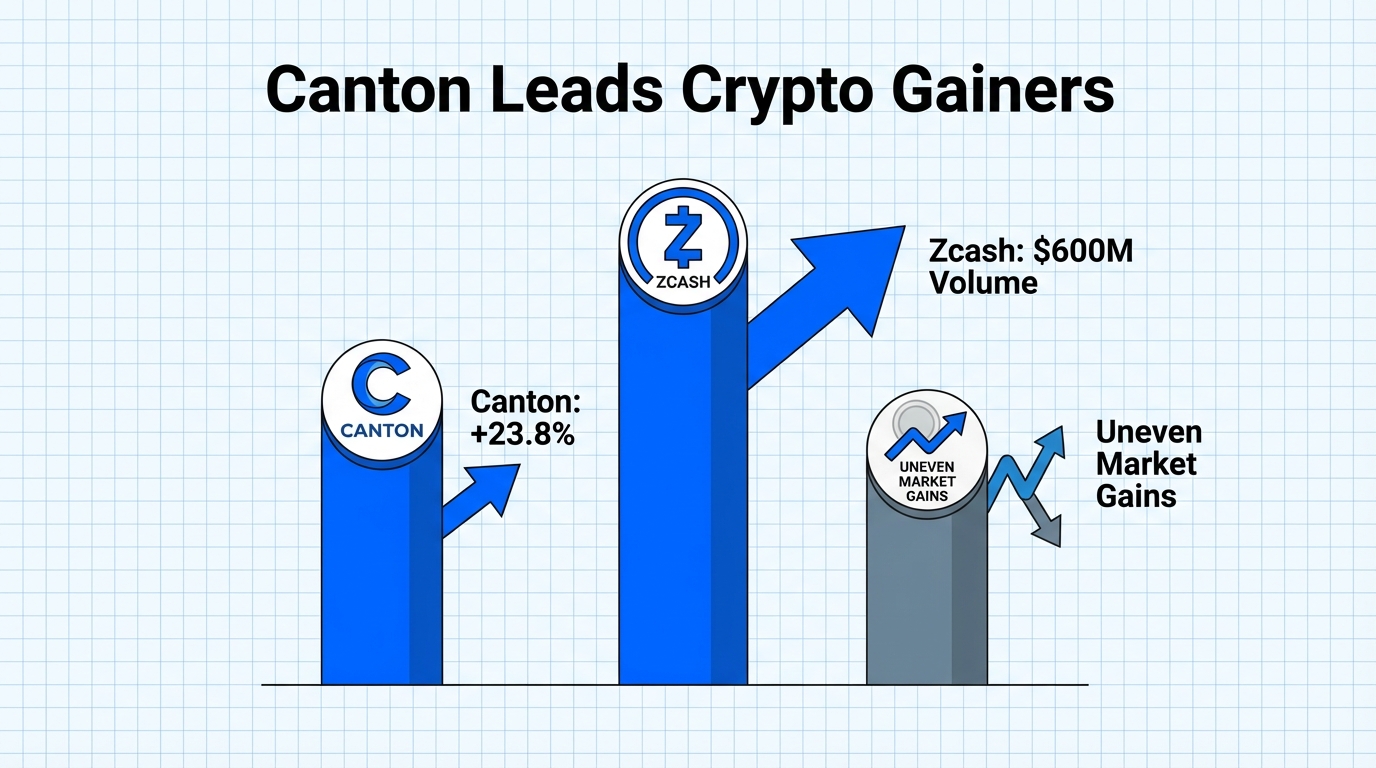
Jon: Alright, let’s pop the hood on Canton. At its core, the Canton Network is a decentralized protocol built for privacy-preserving applications, particularly in finance. It uses a unique architecture called the Canton Synchronization Protocol, which allows multiple distributed ledgers to interoperate without a central authority. Think of it as a middleware layer that connects siloed blockchains, ensuring data privacy through zero-knowledge proofs and secure multi-party computation.
Lila: Zero-knowledge proofs? That’s like proving you know something without revealing what it is, right? Like showing you’re over 21 without sharing your birthdate.
Jon: Spot on. In Canton’s case, it enables transactions where participants can verify details without seeing the full picture. The CC token powers this ecosystem—it’s used for governance, staking, and paying for network fees. Token mechanics are straightforward: supply is capped, with burns from transaction fees to create scarcity over time. But it’s not about pumping value; it’s about incentivizing secure participation.
Lila: How does this compare to other privacy coins or networks, say like Monero or Zcash?
Jon: Good question. Canton stands out because it’s enterprise-focused, not just for anonymous peer-to-peer transfers. Let’s map this out in a quick comparison.
| Feature | Canton (CC) | Monero (XMR) | Zcash (ZEC) |
|---|---|---|---|
| Privacy Mechanism | Zero-Knowledge Proofs + Secure Multi-Party Computation | Ring Signatures + Stealth Addresses | zk-SNARKs for Shielded Transactions |
| Primary Focus | Institutional Interoperability & RWAs | Anonymous P2P Transactions | Optional Privacy for General Use |
| Scalability | High, via Sharded Architecture | Moderate, Privacy Overhead | Improving with Halo Upgrades |
| Regulatory Fit | Strong for Institutions (e.g., DTCC Ties) | Challenged Due to Full Anonymity | Balanced with Transparent Options |
Jon: As you can see, Canton bridges the gap for big finance, which is why its recent 17% daily rocket and 40% weekly gain are tied to news like the DTCC partnership and AI integrations. But technically, it’s the protocol’s ability to handle synchronized, private ledgers that sets it apart.
Lila: That table clarifies a lot. So who actually uses this? Beyond the price hype, what are the real applications?
Jon: Great pivot. On the developer side, Canton is used for building decentralized applications (dApps) that require privacy, like tokenized securities or cross-chain settlements. For users—think institutions—it’s about secure asset tokenization. For instance, banks can tokenize bonds or real estate on Canton, ensuring compliance while keeping trade details private. It’s also gaining traction in AI, where data privacy is crucial for training models on sensitive datasets without exposure. The technical benefit? Reduced counterparty risk and faster settlements, all without a central clearinghouse.
Lila: So, not for everyday retail traders, but more for the back-office plumbing of finance?
Jon: Yep, exactly. And with trading volumes dropping on holidays but Canton’s activity picking up, it shows genuine interest from that sector.
Lila: If someone’s curious to learn more without jumping into the markets, what’s a good starting point?
Jon: Let’s outline an educational action plan. Start with Level 1: Research and Observation. Dive into Canton’s official documentation or whitepaper—available on their site. Use blockchain explorers like Etherscan (if it’s Ethereum-compatible) to track CC token metrics, such as transaction volumes or holder distribution. Dashboards on sites like CoinMarketCap or DefiLlama can show real-time data without any commitment. It’s like window-shopping to understand the mechanics.
Lila: Sounds safe. What about getting hands-on, say Level 2?
Jon: For Level 2: Testnet Experimentation. Canton likely has a testnet where you can simulate interactions—deploy a smart contract or test privacy features using fake tokens. Tools like Remix IDE for Ethereum-based chains can help if it’s compatible. Emphasize: this is zero-risk learning. Experiment with building a simple private transaction demo to grasp the zero-knowledge side. Remember, it’s about understanding the tech, not speculating.
Lila: Perfect—no wallets or real money involved.
Jon: To wrap up, Canton represents an intriguing step in blending privacy with institutional blockchain needs. The recent gains—up 25% on Christmas Eve, 6% amid AI drives, and overall 40% weekly—highlight its momentum, but it’s the architecture for RWAs and secure interoperability that could drive long-term value. Limitations? Scalability in high-volume scenarios and regulatory hurdles remain, as with any crypto project.
Lila: Absolutely, and readers should remember crypto’s volatility and uncertainty. Do your own research, and approach with caution—markets can shift fast.
Jon: Well said. It’s worth watching how Canton evolves, especially with 2026 events like potential supply shocks and deeper DTCC integrations. But always focus on the tech fundamentals.
References
- Canton Leads Daily Crypto Gainers as Trading Activity Picks Up
- Official Canton Network Site
- This New Privacy Coin Surged 25% on Christmas Eve, Here’s Why
- Canton (CC) Rockets by 17% Daily, Bitcoin (BTC) Stopped at $88K: Market Watch