
Did AAVE drop 18%? Unpack the Aave governance clash and what it means for tokenholder power in DeFi.#Aave #DeFiGovernance #Tokenholder
Quick Video Breakdown: This Blog Article
This video clearly explains this blog article.
Even if you don’t have time to read the text, you can quickly grasp the key points through this video. Please check it out!
If you find this video helpful, please follow the YouTube channel “BlockChainBulletin,” which delivers daily Crypto news.
https://www.youtube.com/@BlockChainBulletins
Read this article in your native language (10+ supported) 👉
[Read in your language]
Aave’s Governance Debate Highlights a Key Question About Tokenholder Power in DeFi
Jon: Hey Lila, have you been following the latest buzz in DeFi? There’s this heated governance debate bubbling up in the Aave community that’s got everyone talking about who really holds the power in these decentralized protocols. It’s based on recent news where the Aave DAO and Aave Labs are clashing over things like brand assets, revenue sharing, and token alignment proposals. From what I’ve seen, the AAVE token even dropped 18% in a week amid all this drama, which is steeper than major tokens like ETH or SOL.
Lila: Oh, interesting. I’ve heard bits and pieces, but it sounds like internal politics gone wild. What’s the core issue here?
Jon: At its heart, it’s about the balance of power between tokenholders in the DAO and the core development team at Aave Labs. There’s a proposal that’s stirring things up, suggesting ways to align incentives, but it’s led to accusations of governance attacks and even the founder buying up $10M in tokens right before a vote. The community is split on who controls the protocol’s brand, IP, and fees from things like CoW swaps. It’s being called one of the most important debates on tokenholder rights in DeFi.
Lila: Why does this matter? Isn’t DeFi supposed to be all about decentralization and community control?
Jon: Exactly, and that’s the witty irony here—DeFi promises power to the people, but when push comes to shove, it’s like a family reunion where everyone’s arguing over the inheritance. This debate highlights a key question: How much real power do tokenholders have in shaping a protocol’s future, especially when there’s tension between the decentralized community and the centralized devs who built it? It could set precedents for other DAOs, showing whether token voting is truly sovereign or just a polite suggestion. Worth watching as it unfolds into 2025, but remember, these are volatile spaces—risks remain high.
Lila: Okay, that makes sense. But let’s break it down. What’s the actual problem they’re facing?
Jon: The problem boils down to a classic tension in DeFi governance: decentralization in theory versus efficiency in practice. In Aave’s case, the DAO, which is governed by AAVE tokenholders, is supposed to make decisions on protocol upgrades, treasury management, and partnerships. But Aave Labs, the company behind the initial development, holds a lot of influence over things like the brand name, trademarks, and even revenue streams from integrations like CoW Protocol fees. A recent proposal aimed to “align” tokenholders more closely with the protocol’s success, but it’s been criticized as potentially bad for the ecosystem, with the founder himself calling it out. This has exposed fractures—tokenholders want more control and value accrual, while Labs argues for operational freedom to keep innovating.
Lila: That sounds messy. Can you clarify with an analogy? I need something relatable to wrap my head around it.
Jon: Sure, think of it like a co-op apartment building. The residents (tokenholders in the DAO) own shares and vote on big decisions, like roof repairs or amenity fees. But the original builders (Aave Labs) still hold the blueprint copyrights, the building’s name, and maybe even collect rent from a ground-floor cafe. Now, if the residents vote to rebrand or take all cafe profits, the builders might say, “Hold on, that could wreck the structure we’ve maintained.” It’s efficient for the builders to handle day-to-day, but residents feel shortchanged on their ownership rights. In Aave, this manifests as debates over who gets the protocol’s “profits” and branding power, leading to a price crash as uncertainty grows.
Lila: Ah, got it—that analogy clicks. So, how does Aave’s system actually work under the surface to handle these governance mechanics?
Under the Hood: How it Works
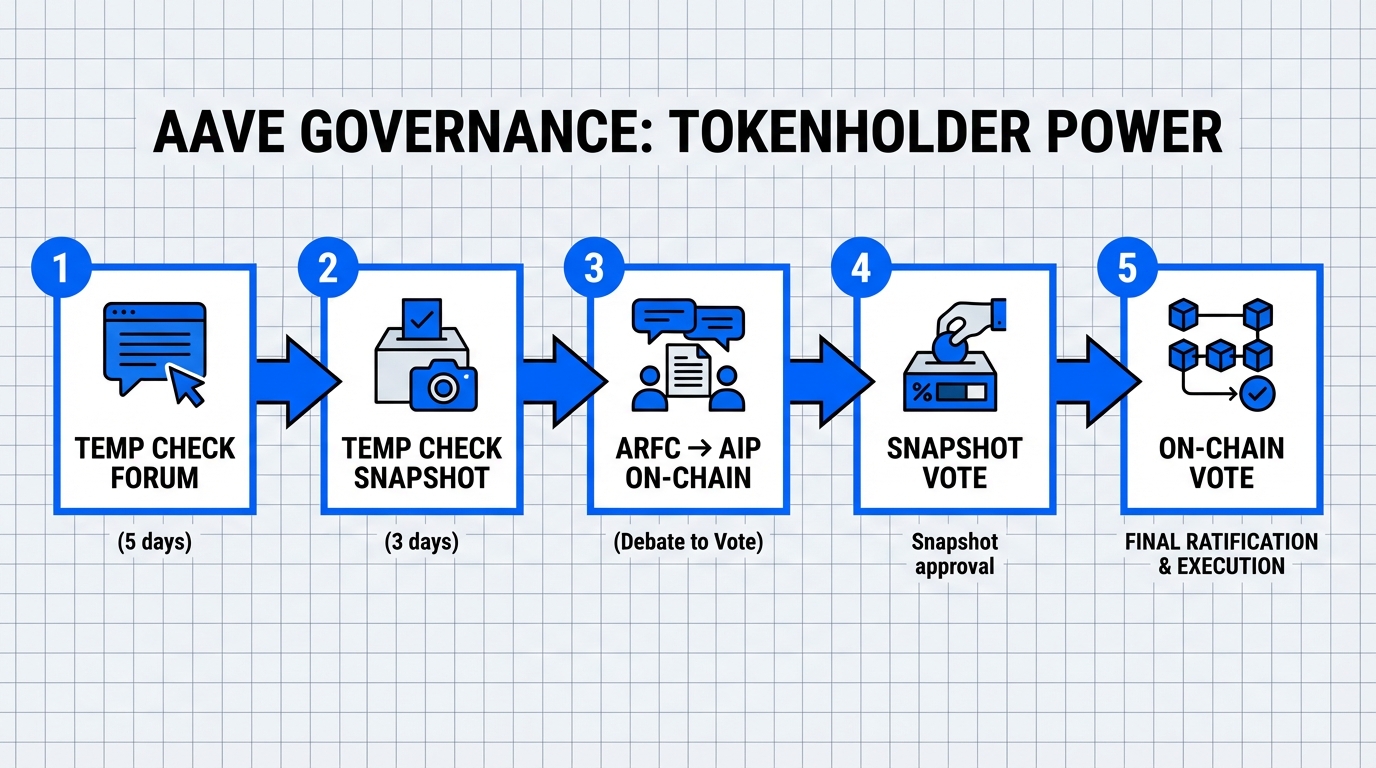
Jon: Alright, let’s dive in. Aave is a decentralized lending protocol on Ethereum and other chains, where users can lend or borrow crypto assets without intermediaries. Governance is powered by the AAVE token, which gives holders voting rights in the Aave DAO. Proposals go through stages: idea discussion on forums, then temperature checks, and finally on-chain votes via tools like Snapshot or direct blockchain execution. Tokenholders stake or delegate their AAVE to vote, with more tokens meaning more influence—it’s quadratic voting in some cases to prevent whale dominance, but whales still sway things.
Lila: Quadratic voting? That sounds fancy—mind simplifying?
Jon: No problem. It’s like giving louder voices to smaller holders by making votes cost quadratically more as you add them. One vote? Cheap. Ten votes? Way more expensive in token commitment. It aims to balance power. In this debate, though, the friction is between this DAO system and Aave Labs’ control over off-chain assets like trademarks. Labs proposes and implements code, but the DAO approves it. The current clash is over a “token alignment” proposal that could shift more revenue to tokenholders, but critics say it risks fracturing the protocol’s unity.
Lila: Okay, and how does this compare to other governance models in DeFi or even traditional setups?
Jon: Great question. Let’s map it out in a table to see the differences clearly.
| Aspect | Traditional Finance Governance | Aave DeFi Governance |
|---|---|---|
| Decision-Makers | Board of directors and executives, often appointed by major shareholders. | Tokenholders via DAO votes; anyone with AAVE can participate. |
| Power Distribution | Centralized, with legal protections and fiduciary duties. | Decentralized but prone to whale influence; quadratic voting helps but doesn’t eliminate it. |
| Conflict Resolution | Courts and regulations enforce decisions. | On-chain votes and community consensus; no legal recourse, leading to forks or disputes like this one. |
| Value Accrual | Profits to shareholders via dividends. | Protocol fees can go to treasury or token buybacks, but debates over direct token benefits. |
| Risks | Regulatory oversight minimizes some abuses. | Governance attacks, low voter turnout, and price volatility from disputes. |
Jon: As you can see, Aave’s model empowers users more directly, but it introduces new challenges, like the current feud where Labs is accused of resisting full handover of control.
Lila: Fascinating comparison. So who actually uses this? I mean, beyond the tokenholders in the debate, what’s the practical application?
Jon: Good pivot. On the user side, Aave is used by everyday DeFi participants for lending and borrowing—think earning interest on your stablecoins or leveraging assets without selling them. Developers integrate Aave into dApps for flash loans, which are instant, uncollateralized borrows repaid in the same transaction—great for arbitrage or refinancing. For governance, it’s a playground for tokenholders to propose risk parameters, add new assets, or even upgrade the protocol. The technical benefit is resilience: no single point of failure, as decisions are crowd-sourced. But in this debate, it’s testing how well that holds up when real money and power are at stake. Institutions might use it for on-chain treasury management, valuing the transparency.
Lila: That sounds useful. If someone’s interested in learning more hands-on, where do they start without jumping into the deep end?
Jon: Let’s outline an educational action plan. Start with Level 1: Research and Observation. Dive into Aave’s official docs at aave.com—read the governance section to understand proposal lifecycles. Check explorers like Etherscan for on-chain votes or Dune Analytics dashboards for DAO activity metrics. Follow forums like the Aave governance board to see real discussions, including this debate. It’s like auditing a company’s shareholder meetings without owning stock.
Lila: Cool, and for getting hands-on safely?
Jon: Level 2: Testnet Experimentation. Aave has testnets on networks like Sepolia or Polygon testnet. Set up a wallet like MetaMask, get test ETH from a faucet, and simulate lending/borrowing. To engage with governance, use Snapshot.org to practice voting on mock proposals—it’s off-chain and risk-free. If you’re technical, fork the Aave repo on GitHub and tinker with smart contracts in a local environment using tools like Hardhat. Emphasize: this is for learning mechanics, not real value at risk. Understand the code to see how votes trigger contract upgrades.
Lila: Makes sense—keeps it educational.
Jon: To wrap up, this Aave debate underscores a maturing DeFi space where tokenholder power is being tested against practical development needs. It’s an opportunity for better alignment, but limitations like voter apathy and centralization risks persist. If resolved well, it could strengthen Aave’s dominance in lending.
Lila: Absolutely, but let’s remind folks: crypto is volatile, and governance outcomes are uncertain. Do your own research, and remember, these are experimental systems—approach with caution.
Jon: Well said. Here’s to thoughtful exploration in Web3.
References
- Aave’s Governance Debate Highlights a Key Question About Tokenholder Power in DeFi
- Official Aave Website
- AAVE News: Aave community splits over control of protocol’s brand assets – CoinDesk
- Aave Founder Calls Contentious Token Alignment Proposal ‘Bad for Aave’ – The Defiant