Personally, this Bitcoin Bill could finally provide the rules needed for safer tech innovation.#Bitcoin #Regulation
Quick Video Breakdown: This Blog Article
This video clearly explains this blog article.
Even if you don’t have time to read the text, you can quickly grasp the key points through this video. Please check it out!
If you find this video helpful, please follow the YouTube channel “BlockChainBulletin,” which delivers daily Crypto news.
https://www.youtube.com/@BlockChainBulletins
Read this article in your native language (10+ supported) 👉
[Read in your language]
Trump Vows to Sign Major Bitcoin Bill ‘Very Soon,’ Says U.S. Must Remain Crypto Capital
Jon: Hey Lila, have you seen the latest buzz? President Trump just vowed to sign a major Bitcoin bill ‘very soon,’ emphasizing that the U.S. must stay the crypto capital of the world. It’s from Bitcoin Magazine, and it ties into broader talks about crypto regulation. Basically, this could be a game-changer for how digital assets are handled legally here.
Lila: Oh, interesting! I’ve been hearing whispers about crypto bills, but this sounds big. What’s the gist of what Trump said, and why is everyone talking about it now?
Jon: Sure, let’s break it down. From recent reports, Trump mentioned in a statement that American leadership in crypto is key to outpacing China. This bill, often referred to as a crypto market structure bill, aims to clarify rules for digital assets like Bitcoin, stablecoins, and more. It’s been in the works with senators introducing drafts recently—think of it as finally drawing boundaries for a wild west industry. For context, Bitcoin’s price dipped below $92,000 amid tariff talks, but optimism around this bill has kept spirits high, with some analysts predicting it could push prices toward $110,000 in 2026.
Lila: Why does this matter? Is it just political hype, or could it actually change things for crypto users and developers?
Jon: Great question—it’s not just hype. Right now, the crypto space in the U.S. faces a patchwork of regulations. The SEC and CFTC are often at odds over whether something like Bitcoin is a security or a commodity. This bill could streamline that, providing clear jurisdiction and investor protections. It matters because regulatory clarity could boost innovation, attract more institutional money, and prevent the U.S. from falling behind places like Europe or Asia in crypto adoption. But remember, it’s still in draft stages; a Senate bill was delayed recently due to debates over stablecoins. If signed, it might end years of uncertainty.
Lila: That makes sense. But what’s the core problem here? Why has crypto regulation been such a mess?
Jon: The problem boils down to outdated laws trying to fit new tech. Traditional finance has rules built for stocks and banks, but crypto is decentralized—think peer-to-peer transfers without middlemen. Regulators worry about fraud, money laundering, and market manipulation, but without clear rules, companies face lawsuits or flee overseas. For instance, the Howey Test from the 1940s is still used to decide if a token is a security, which feels like using a horse-drawn carriage rule for electric cars.
Lila: Okay, that analogy helps. Can you elaborate with a real-world example? Like, how does this confusion play out in everyday crypto stuff?
Jon: Absolutely. Imagine traffic in a city without clear road signs or speed limits. Cars (that’s tokens and blockchains) zoom around, but accidents happen because no one knows the rules. Exchanges get fined for listing ‘unregistered securities,’ developers hesitate to launch projects fearing SEC crackdowns, and users worry about taxes on every transaction. This bill could be like installing traffic lights and highways—defining what the CFTC oversees (commodities like Bitcoin) versus the SEC (investment contracts). It’s not perfect; stablecoins, which are pegged to fiat like the dollar, are a hot debate point because they could challenge the dollar’s dominance if not regulated right.
Lila: Got it. So, it’s about creating order without stifling the innovation. That sounds reasonable.
Under the Hood: How it Works
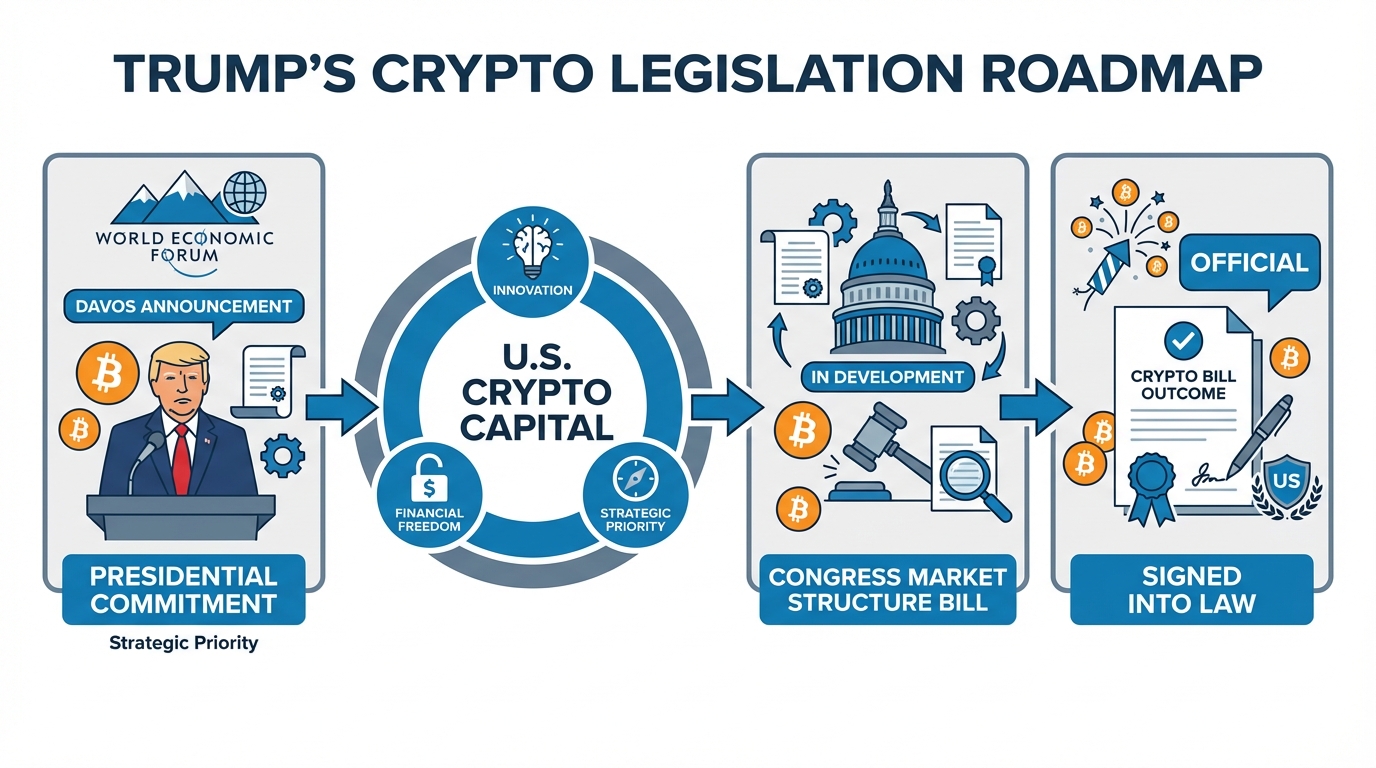
Jon: Alright, let’s dive into the mechanics of this proposed bill. The diagram above illustrates a high-level framework—click it to enlarge. Essentially, the bill aims to define crypto market rules, splitting oversight between agencies. It would classify most cryptocurrencies as commodities under the CFTC, giving them lighter regulation compared to securities under the SEC. Stablecoins get special treatment: issuers would need to register, hold reserves, and comply with anti-money laundering rules to ensure stability.
Lila: Whoa, that diagram shows a lot of arrows between agencies. Can you simplify? What’s the key difference in how things would work post-bill?
Jon: Sure. Today, if you launch a token, you might accidentally create a ‘security’ and face heavy disclosure requirements. The bill proposes a test: if a network is sufficiently decentralized (no single entity controls it), it’s a commodity. Consensus mechanisms like Bitcoin’s Proof-of-Work would qualify, meaning miners and nodes operate freely. For token mechanics, it could allow for clearer rules on trading, custody, and even DeFi protocols. But it’s not all smooth—trade-offs include potential over-regulation of stablecoins, which could limit innovation in dollar-pegged assets.
Lila: Okay, and how does this compare to the status quo? A table might help visualize.
Jon: Good idea. Here’s a quick comparison:
| Aspect | Current U.S. Regulation | Proposed Bill |
|---|---|---|
| Oversight Agency | SEC for securities, CFTC for commodities—often overlapping and unclear | Clear split: CFTC for most cryptos, SEC for investment-like tokens |
| Stablecoins | Treated variably, with risks of being deemed securities or unregulated | Specific framework: registration, reserves, and audits required |
| Innovation Impact | High uncertainty leads to lawsuits and offshoring | More clarity could encourage U.S.-based development and investment |
| Investor Protections | Patchy, with reliance on enforcement actions | Strengthened via disclosures and anti-fraud measures |
Lila: That table clears it up—thanks! So, the bill is like upgrading from a dirt road to a paved highway for crypto.
Jon: Exactly. But let’s not forget limitations: it’s bipartisan but could face amendments, and global factors like China’s crypto stance might influence it.
Lila: So who actually uses this? I mean, beyond traders, what are the real-world applications if this bill passes?
Jon: Fair point. On the developer side, clearer rules mean building DeFi apps or NFT platforms without fearing shutdowns—focus on tech like smart contracts on Ethereum or Bitcoin’s Layer 2 solutions. For users, it could mean safer exchanges and wallets, with better protections against hacks. Think financial inclusion: remittances via stablecoins become reliable. Businesses might integrate crypto payments more easily, like Trump’s own ventures in Bitcoin mining. Even non-crypto folks benefit indirectly—stronger regulations could stabilize markets, reducing volatility spills into traditional finance.
Lila: Cool, so it’s about enabling practical tech use, not just speculation.
Jon: Precisely. Now, if you’re curious to learn more hands-on, let’s talk an educational action plan. No financial moves here—just pure learning.
Lila: Yeah, how can someone start understanding this without risks?
Jon: Level 1: Research and observation. Start with official docs—read the bill drafts on Congress.gov or SEC statements. Use blockchain explorers like Etherscan to see real transactions. Follow reputable sources like CoinDesk for updates on the bill’s progress. It’s like auditing a company’s books before diving in.
Lila: And for getting hands-on safely?
Jon: Level 2: Testnet experimentation. Most blockchains have test networks—Bitcoin Testnet lets you simulate mining or transactions with fake coins. Try building a simple smart contract on Ethereum’s Sepolia testnet using tools like Remix IDE. It’s zero-risk learning, helping you grasp mechanics without real stakes. Remember, this builds knowledge, but always verify with multiple sources.
Lila: That sounds approachable. Wrapping up, what’s the big picture?
Jon: In summary, this bill represents a potential shift toward mature crypto regulation in the U.S., balancing innovation with safety. Opportunities include more robust ecosystems and global leadership, but limitations like political delays and market volatility persist.
Lila: Right, and let’s not forget: crypto is volatile and uncertain. Always approach with caution and continuous learning.
Jon: Well said. It’s an evolving space worth watching thoughtfully.
About the Authors
Jon is a Web3 researcher and practitioner with years of experience in blockchain architecture.
Lila is a rational learner passionate about demystifying tech for beginners.
References
- Trump Vows to Sign Major Bitcoin Bill ‘Very Soon,’ Says U.S. Must Remain Crypto Capital
- Trump says he hopes to sign crypto bill very soon to beat China – TheStreet
- SEC Chair Anticipates Trump Signing Crypto Market Structure Bill – Regulation Bitcoin News
- US senators introduce long-awaited bill to define crypto market rules | Reuters
▼ AI tools to streamline research and content production (free tiers may be available)
Free AI search & fact-checking
👉 Genspark
Recommended use: Quickly verify key claims and track down primary sources before publishing
Ultra-fast slides & pitch decks (free trial may be available)
👉 Gamma
Recommended use: Turn your article outline into a clean slide deck for sharing and repurposing
Auto-convert trending articles into short-form videos (free trial may be available)
👉 Revid.ai
Recommended use: Generate short-video scripts and visuals from your headline/section structure
Faceless explainer video generation (free creation may be available)
👉 Nolang
Recommended use: Create narrated explainer videos from bullet points or simple diagrams
Full task automation (start from a free plan)
👉 Make.com
Recommended use: Automate your workflow from publishing → social posting → logging → next-task creation
※Links may include affiliate tracking, and free tiers/features can change; please check each official site for the latest details.