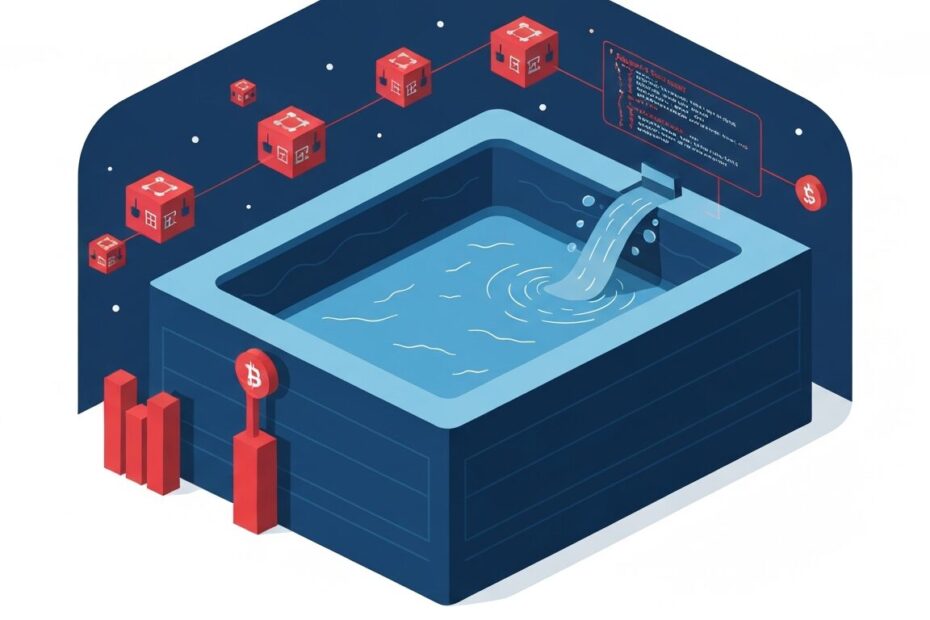
Personally, the NYC Token situation highlights the critical need to check on-chain data first.#DeFi #blockchain
Quick Video Breakdown: This Blog Article
This video clearly explains this blog article.
Even if you don’t have time to read the text, you can quickly grasp the key points through this video. Please check it out!
If you find this video helpful, please follow the YouTube channel “BlockChainBulletin,” which delivers daily Crypto news.
https://www.youtube.com/@BlockChainBulletins
Read this article in your native language (10+ supported) 👉
[Read in your language]
Former NYC Mayor Vehemently Denies Profiting from Crypto Venture Amid 80% NYC Token Crash
Jon: Hey Lila, have you seen the latest buzz in the crypto world? Former New York City Mayor Eric Adams is in the spotlight again, this time denying any profits from his NYC Token venture after it crashed hard. According to reports, the token launched with a lot of hype, surged to a market cap of around $580 million, and then plummeted by over 80% in a matter of days. Accusations of a rug pull are flying, but his team insists it was just market volatility.
Lila: Wow, Jon, that sounds like a classic crypto rollercoaster. I’ve read a bit about it—Adams promoted this as a meme coin to fight anti-Americanism and antisemitism, right? But why does this matter for someone trying to understand crypto basics?
Jon: Exactly, Lila. It matters because it’s a textbook example of how meme coins can highlight both the innovation and the pitfalls in blockchain tech. NYC Token isn’t some groundbreaking protocol; it’s a simple token on a network like Solana or Ethereum, probably created with tools like Pump.fun for quick launches. The crash underscores issues like liquidity pools, developer controls, and investor risks. For beginners, it’s a reminder that not all tokens are built the same—some are serious projects, others are hype-driven experiments that can evaporate fast.
Lila: Okay, that makes sense. So, beyond the drama, what’s the real problem here that we should be learning from?
Jon: The core problem is the fragility of liquidity in decentralized finance, or DeFi. In this case, NYC Token allegedly saw a massive withdrawal from its liquidity pool right after launch, causing the price to tank. Think of it like a neighborhood lemonade stand: you’ve got a pool of lemonade (the token’s liquidity) that people buy from. If the stand owner suddenly yanks out most of the lemonade to sell elsewhere, customers are left with empty cups, and the price skyrockets then crashes as supply dries up. That’s essentially a “rug pull”—when creators drain the pool, leaving holders with worthless tokens. Adams denies involvement, blaming volatility, but on-chain data shows unusual activity.
Lila: That analogy helps—it’s like pulling the rug out from under investors, literally. But clarify for me: what’s a liquidity pool, and how does it tie into token crashes like this?
Jon: Sure, let’s break it down. In DeFi, tokens often trade on automated market makers (AMMs) like Uniswap. A liquidity pool is a smart contract holding pairs of assets, say NYC Token and a stablecoin like USDC. Providers add to the pool for fees, and the pool sets prices based on supply ratios. If someone removes a huge chunk—especially if they’re the creator with special access—the ratio imbalances, and the token’s value plummets. It’s not always malicious; markets can be volatile, but in rug pulls, it’s intentional. For NYC Token, reports suggest over $2.5 million vanished, leading to that 81% drop. The analogy to plumbing works too: imagine a water reservoir for a town. If the manager siphons it off overnight, pipes run dry, and chaos ensues.
Lila: Got it. So the “why” is about trusting decentralized systems that aren’t always as trustless as they seem, especially with new tokens.
Under the Hood: How it Works
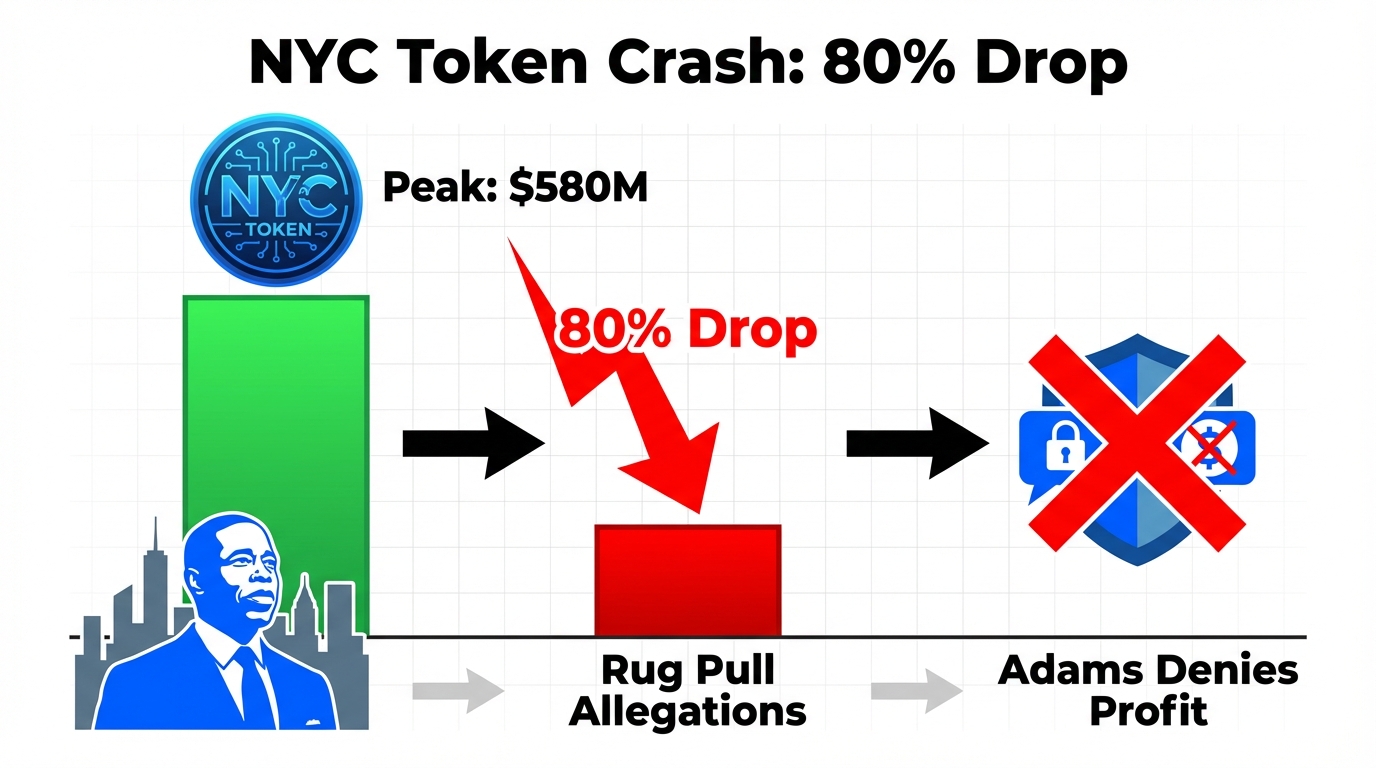
Jon: Alright, Lila, let’s dive into the mechanics. That diagram above illustrates a typical meme coin setup on a blockchain like Solana. At its core, NYC Token is likely an SPL token (Solana Program Library token), which is just a standard for creating fungible assets. The launch probably used a platform that automates bonding curves—mathematical formulas that increase price as more people buy in, creating that initial surge.
Lila: Bonding curves? Rephrase that for me—sounds technical.
Jon: Fair point. A bonding curve is like a vending machine that raises prices as inventory drops. Early buyers get cheap tokens, but as demand grows, the curve pushes prices up automatically via smart contracts. For NYC Token, this led to that quick $580 million market cap. But the crash? That’s where the liquidity pool comes in. After the initial pump, the token pairs with a base asset in a pool on a DEX (decentralized exchange). If liquidity is removed, trading halts or prices collapse.
Lila: Okay, so it’s automated but still vulnerable. How does this compare to more established tokens?
Jon: Good question. Let’s compare meme coins like NYC Token to utility tokens in something like Ethereum’s ecosystem.
| Aspect | Meme Coins (e.g., NYC Token) | Utility Tokens (e.g., ETH or UNI) |
|---|---|---|
| Purpose | Hype and community-driven, often no real utility beyond trading. | Powers networks, like gas fees or governance voting. |
| Liquidity Mechanism | Often shallow pools, prone to rugs via dev wallets. | Deep, decentralized pools with locked liquidity. |
| Risk Level | High volatility, potential for total loss. | Still volatile, but backed by ecosystem value. |
| Creation Ease | Minutes with tools like Pump.fun. | Requires audits and community building. |
Jon: As you can see, meme coins prioritize speed over security, which is why crashes like this happen. The under-the-hood part is all smart contracts—code that runs on the blockchain without intermediaries.
Lila: That table clarifies a lot. So who actually uses this? I mean, beyond speculators getting burned.
Jon: Great segue. On the technical side, meme coins like NYC Token can serve as entry points for learning blockchain. Developers use them to experiment with token standards, like ERC-20 on Ethereum, understanding minting, burning, and transfers. For users, they highlight community governance—some evolve into DAOs where holders vote on funds. In Adams’ case, it was pitched for charitable causes, like donating proceeds to fight hate, which shows how tokens can technically channel value to real-world applications via transparent wallets. But the benefit is in the tech: fast, low-cost transactions on chains like Solana, enabling micro-donations without banks.
Lila: So, technically, it’s about efficient value transfer, not just memes.
Jon: Precisely. Another use case is in education—projects like this demonstrate on-chain analytics. Tools like Dune Analytics let you track wallet movements, revealing if a “rug” happened by spotting large transfers from pool addresses.
Lila: Alright, say someone’s interested in learning more without risking anything. What’s an educational action plan?
Jon: Let’s structure it in levels. Level 1: Research and Observation. Start by reading whitepapers or litepapers for similar tokens—though meme coins often lack them, check Adams’ project site if available. Use blockchain explorers like Solscan or Etherscan to view transaction histories. For NYC Token, you’d search its contract address and watch liquidity events. Dashboards on Dexscreener show real-time charts, helping you spot patterns like sudden volume spikes.
Lila: That sounds safe. And Level 2—how to get hands-on without real stakes?
Jon: Level 2: Testnet Experimentation. Most blockchains have testnets—free sandboxes. On Solana’s devnet, you can create a mock token using tools like the Solana CLI or Anchor framework. Simulate a liquidity pool with fake SOL, add/remove liquidity, and observe price changes. It’s like a flight simulator for DeFi. Emphasize: this is for learning mechanics, not live trading. Risks remain in real nets, so stick to test environments to understand without financial exposure.
Lila: Perfect, that keeps it educational.
Jon: To wrap up, the NYC Token saga shows crypto’s double-edged sword: innovative tools for quick launches, but structural weaknesses like unsecured liquidity. Opportunities lie in better audited projects, but limitations include regulatory scrutiny—Adams is facing accusations, after all.
Lila: Yeah, and remember, volatility is king in crypto. Stories like this are unpredictable; always approach with caution and focus on learning over speculation.
Jon: Well said. It’s a thoughtful reminder that blockchain is evolving, but buyer beware.
References & Further Reading
- Former NYC Mayor Vehemently Denies Profiting from Crypto Venture Amid 80% NYC Token Crash
- Eric Adams crypto coin crashes soon after launch, sparking scam accusations – The Washington Post
- Investors cry foul over former NYC Mayor Eric Adams’s crypto launch: ‘Such an obvious rug’ | Fortune
- Former NYC Mayor Eric Adams accused of $2.5 million crypto ‘rug pull’ as his NYC Token crashes | The Verge
▼ AI tools to streamline research and content production (free tiers may be available)
Free AI search & fact-checking
👉 Genspark
Recommended use: Quickly verify key claims and track down primary sources before publishing
Ultra-fast slides & pitch decks (free trial may be available)
👉 Gamma
Recommended use: Turn your article outline into a clean slide deck for sharing and repurposing
Auto-convert trending articles into short-form videos (free trial may be available)
👉 Revid.ai
Recommended use: Generate short-video scripts and visuals from your headline/section structure
Faceless explainer video generation (free creation may be available)
👉 Nolang
Recommended use: Create narrated explainer videos from bullet points or simple diagrams
Full task automation (start from a free plan)
👉 Make.com
Recommended use: Automate your workflow from publishing → social posting → logging → next-task creation
※Links may include affiliate tracking, and free tiers/features can change; please check each official site for the latest details.