
In my view, the rise of Crypto ETFs marks a key step for regulated digital access.#CryptoETFs #Regulation
Quick Video Breakdown: This Blog Article
This video clearly explains this blog article.
Even if you don’t have time to read the text, you can quickly grasp the key points through this video. Please check it out!
If you find this video helpful, please follow the YouTube channel “BlockChainBulletin,” which delivers daily Crypto news.
https://www.youtube.com/@BlockChainBulletins
Read this article in your native language (10+ supported) 👉
[Read in your language]
Wall Street’s Crypto Gateway Expands: SEC Fast-Tracks New ETF Approvals as Digital Assets Go Mainstream
Jon: Hey Lila, have you seen the latest buzz from Wall Street? The SEC has been fast-tracking approvals for new crypto ETFs this year, and it’s pushing digital assets further into the mainstream. According to recent reports, 2025 has seen spot ETFs for Bitcoin, Ethereum, and even newcomers like XRP and Solana get the green light, with inflows hitting $31 billion for Bitcoin and Ethereum alone. It’s like the floodgates are opening for institutional money to flow into crypto without the usual headaches of direct ownership.
Lila: Whoa, that sounds big. I’ve heard about ETFs before, but crypto versions? Catch me up— what’s happening here, and why now?
Jon: Sure thing. ETFs, or Exchange-Traded Funds, are basically baskets of assets that trade like stocks on traditional exchanges. For crypto, these spot ETFs hold the actual digital assets, like Bitcoin or Ethereum, and let investors gain exposure without managing wallets or keys themselves. The SEC’s shift under the current administration has sped up approvals—think of it as regulators finally warming up to crypto after years of caution. Sources like Decrypt and The Block note how this has led to a multi-asset era, with Wall Street firms like BlackRock piling in.
Lila: Okay, got it. But why does this matter? Is it just more hype, or is there real substance?
Jon: It’s substantive because it bridges traditional finance and crypto. Before, institutions were wary due to regulatory uncertainty and volatility. Now, with clearer rules—like the EU’s MiCA and U.S. stablecoin laws—it’s easier for big players to participate. This could stabilize markets over time, but remember, crypto’s still volatile. Worth watching how it evolves, though.
Lila: Fair point. So, what’s the problem this is solving? Crypto’s been around; why the need for these gateways?
Jon: The core issue is accessibility and trust. Traditional investors, like pension funds or everyday folks with brokerage accounts, often avoid crypto because of the technical barriers—setting up wallets, dealing with hacks, or navigating unregulated exchanges. Plus, there’s the regulatory fog: without SEC approval, these assets felt like the Wild West. This fast-tracking addresses that by creating regulated on-ramps.
Lila: Makes sense, but can you break it down further? Maybe with an analogy?
Jon: Absolutely. Think of crypto as a bustling but chaotic marketplace, like a street fair where vendors sell exotic goods, but there’s no security or receipts. Investors want in for the excitement, but they’re scared of pickpockets or fake merchandise. ETFs are like building a secure mall around that fair: regulated entrances, insurance, and easy parking. The SEC’s approvals are the building permits speeding up construction, letting more people shop safely without diving into the chaos themselves.
Lila: Haha, nice one—the mall analogy clicks. So, it’s about making crypto feel as straightforward as buying Apple stock?
Jon: Exactly. It reduces friction, but doesn’t eliminate risks like price swings or underlying tech issues.
Under the Hood: How it Works
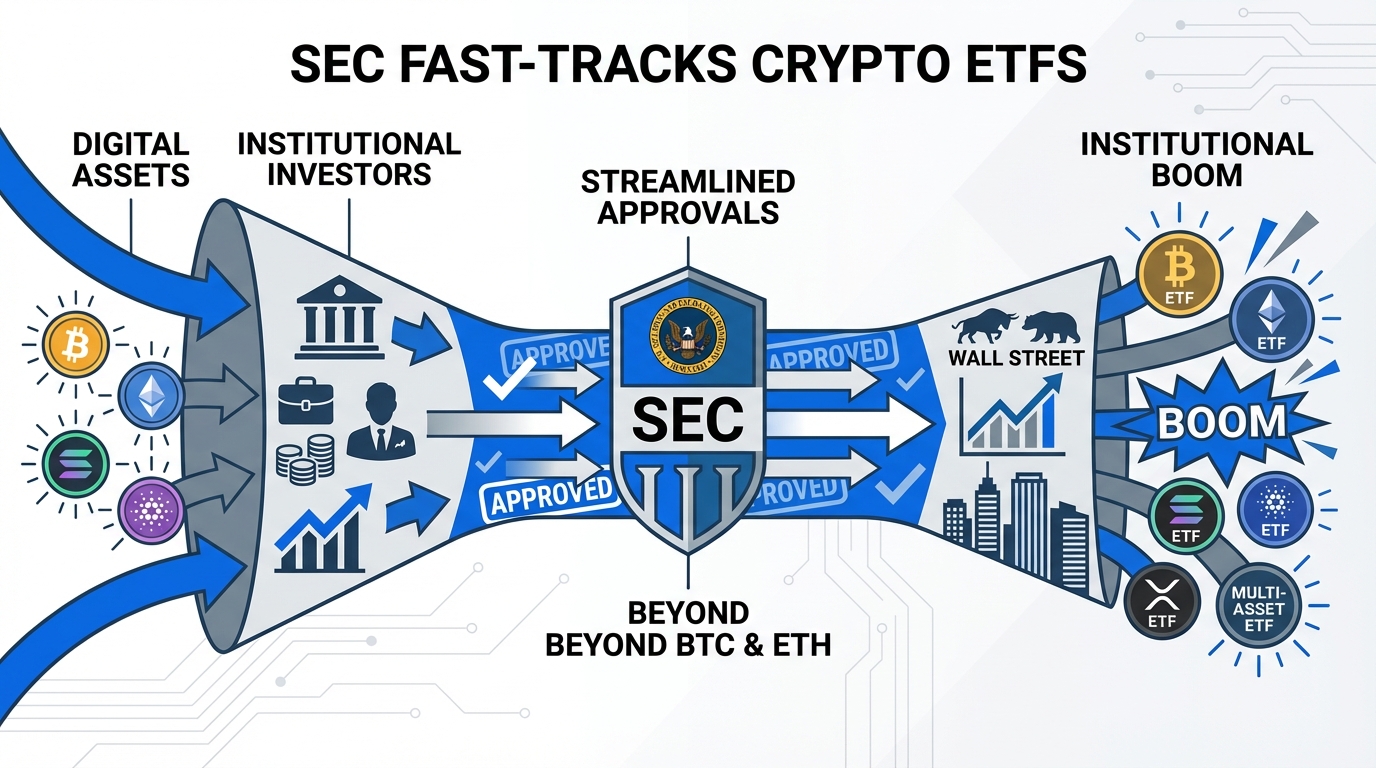
Jon: Alright, let’s peel back the layers. At its core, a crypto ETF is a fund that tracks the price of a digital asset or a basket of them. For spot ETFs, the issuer actually buys and holds the crypto in secure custody—often with partners like Coinbase Custody. Shares of the ETF trade on stock exchanges like NYSE or Nasdaq, with prices updating in real-time based on the underlying asset’s value.
Lila: So, it’s not like futures ETFs, where they’re betting on future prices without holding the asset?
Jon: Spot on—pun intended. Futures ETFs, which we had before 2024, use derivatives and can diverge from the actual crypto price due to rollovers and contango. Spot ones mirror it directly, which is why they’re a game-changer. The SEC’s fast-track in 2025, as per reports from CryptoSlate and CCN, involved streamlined filings under Rule 19b-4, cutting approval times from months to weeks for assets like Solana.
Lila: Gotcha. And token mechanics—wait, ETFs aren’t tokens themselves, right? How does blockchain fit in?
Jon: Right, ETFs are traditional securities, but they interface with blockchain. The fund buys crypto on-chain, stores it in cold wallets, and uses oracles or APIs to feed price data to the exchange. It’s a hybrid: Wall Street front-end, crypto back-end. For staking-enabled ETFs, like some Ethereum ones now, the fund might stake holdings for yields, but that’s still under regulatory review for U.S. products.
Lila: Interesting. To confirm, this means investors get crypto exposure without touching a wallet?
Jon: Precisely. Now, to compare traditional ETFs with these crypto ones, let’s look at a table.
| Aspect | Traditional Stock ETFs | Crypto Spot ETFs |
|---|---|---|
| Underlying Assets | Stocks, bonds, commodities held in custody. | Digital assets like Bitcoin or Ethereum on blockchain. |
| Regulation | Long-established SEC rules. | Evolving; 2025 fast-tracks under SEC and CFTC oversight. |
| Risks | Market volatility, company performance. | High volatility, hacking risks, regulatory changes. |
| Accessibility | Any brokerage account. | Same, but bridges to crypto without direct handling. |
| Fees | Typically low, 0.1-0.5%. | Similar, but custody adds slight premium (0.2-1%). |
Jon: As you can see, they’re similar in structure but crypto adds blockchain layers, like secure custody and on-chain verification.
Lila: Helpful table—clears up the differences. So who actually uses this? Beyond big institutions?
Jon: Good question. On the user side, retail investors use them for easy diversification—add crypto to a portfolio without learning DeFi. Developers and builders benefit indirectly: more liquidity from ETFs can fund projects via increased token values. For example, Solana devs see more grants as ETF inflows boost ecosystem tokens. Institutionally, it’s for hedging or allocation; think pension funds adding 1-5% crypto exposure for potential upside, all while staying compliant.
Lila: And technically, how does it help the blockchain side?
Jon: It increases on-chain activity. ETF issuers buy real tokens, which supports network security—for proof-of-stake chains like Ethereum, that’s more staked ETH, improving consensus. It’s a technical boon: more adoption without users needing to understand gas fees or smart contracts.
Lila: Cool. Now, if someone’s interested in learning more, what’s a safe way to dive in without risks?
Jon: Let’s break it into levels. Start with Level 1: Research and Observation. Read SEC filings on their website—search for ETF prospectuses from issuers like BlackRock or 21Shares. Use blockchain explorers like Etherscan or Solana Explorer to track ETF-held addresses; it’s public data showing real holdings. Dashboards from CoinMarketCap or Messari offer ETF inflow charts without any commitment.
Lila: Sounds beginner-friendly. What about hands-on? Level 2?
Jon: For that, focus on testnets or simulations. While ETFs are traditional, you can experiment with crypto basics on testnets—deploy a mock wallet on Ethereum Goerli testnet to understand custody without real funds. Or use paper trading apps from brokerages to simulate ETF trades. It’s all about learning mechanics safely; emphasize understanding volatility patterns through historical data, not actual investing.
Lila: Smart—keeps it educational.
Jon: To wrap up, this ETF expansion is a solid step toward mainstreaming crypto, offering regulated access and potentially more stable markets. But limitations persist: volatility, regulatory shifts, and the fact that ETFs don’t give you direct control over the assets.
Lila: Yeah, and remember, markets are unpredictable—always do your own research and consider the uncertainties.
Jon: Precisely. It’s an evolving space worth understanding, but approach thoughtfully.
References
- Wall Street’s Crypto Gateway Expands: SEC Fast-Tracks New ETF Approvals as Digital Assets Go Mainstream
- U.S. Securities and Exchange Commission (SEC) Official Site
- The Year in Crypto ETFs 2025: Bitcoin, Ethereum Thrive as XRP and More Join the Party – Decrypt
- 2026 Institutional Crypto Outlook | The Block
- We mapped every major 2025 crypto regulation change to show you which rules actually protect your wallet – CryptoSlate