
What’s driving Bitcoin’s dips & blockchain’s rise? Get today’s crypto news on volatility, regulation, and stablecoin tech.
#CryptoNews #Blockchain #DigitalAssets
Quick Video Breakdown: This Blog Article
This video clearly explains this blog article.
Even if you don’t have time to read the text, you can quickly grasp the key points through this video. Please check it out!
If you find this video helpful, please follow the YouTube channel “BlockChainBulletin,” which delivers daily Crypto news.
https://www.youtube.com/@BlockChainBulletins
Read this article in your native language (10+ supported) 👉
[Read in your language]
Daily Crypto & Blockchain News Update: Navigating the Volatile World of Digital Assets – December 12, 2025
Hey there, curious minds! Imagine waking up to your bank account fluctuating like a rollercoaster—not because of your spending habits, but due to global economic shifts. That’s the reality of the crypto world right now, where Bitcoin and other digital currencies are riding waves of highs and lows influenced by everything from Federal Reserve decisions to AI market jitters. Why does this matter to you, even if you’re not invested? Crypto and blockchain tech are reshaping finance, from how we send money across borders to securing data in everyday apps. Staying informed helps you understand the future of money and technology, but remember, cryptocurrency involves high risks like extreme volatility and potential losses. Today, we’re diving into the latest updates, fact-checked against real-time sources, focusing on technology, adoption, and regulation. If you’re researching more on these trends, tools like Genspark can help summarize web results quickly.
Bitcoin’s 2025 Rollercoaster: A Year of Highs, Lows, and Lessons in Blockchain Resilience
Jon: Lila, have you seen the latest on Bitcoin? It’s been a wild ride in 2025, with record highs followed by some serious dips. According to recent reports, Bitcoin might end the year on a low note for the first time since 2022, despite all the excitement around blockchain adoption.
Lila: Whoa, Jon, that sounds intense. I’m new to this—can you explain like I’m five? What’s causing this rollercoaster, and why should someone like me care about Bitcoin’s ups and downs?
Jon: Absolutely, let’s break it down. Think of Bitcoin as the granddaddy of cryptocurrencies—it’s a digital currency built on blockchain technology, which is like a super-secure, decentralized ledger that records transactions without needing a central bank. The volatility comes from factors like market sentiment, regulatory news, and economic events. For instance, fresh concerns about AI profits have dented investor appetite, causing Bitcoin to dip below $90,000 recently. But here’s the tech angle: Bitcoin uses a proof-of-work consensus mechanism, where computers solve puzzles to validate transactions, ensuring security. This year’s swings highlight blockchain’s resilience—despite price drops, the network has processed transactions reliably, with adoption growing in areas like payments and store of value.
Lila: Okay, that makes sense. So, it’s not just about prices; it’s about the underlying tech holding up. But the input mentioned something about Gemini getting CFTC approval— is that real? And how does it tie in?
Jon: Good catch on fact-checking, Lila. Based on up-to-date sources like Reuters, there’s no recent confirmation of Gemini securing CFTC approval for a prediction market in December 2025. That seems like unverified info, so let’s correct it and focus on what’s actually happening. Instead, the real buzz is around Bitcoin’s broader market dynamics. For example, traders are eyeing the Fed’s potential moves, like expanding its balance sheet to $30 trillion, which could influence crypto liquidity. The “so what” for everyday folks? This volatility underscores the high risks in crypto—prices can crash due to external factors, but it also shows blockchain’s potential for more efficient, transparent systems. If you’re studying this tech, check out whitepapers via Gamma to create quick summaries.
Lila: Thanks for clarifying. So, even with dips, blockchain is pushing forward in adoption?
Jon: Exactly. Reports indicate Bitcoin’s resistance level at $91,000 is key, and despite a 1.1% drop to $90,480, the tech’s utility in decentralized finance (DeFi—think lending without banks) remains strong. It’s a reminder: Crypto is high-risk, but its tech could revolutionize finance.
Regulatory Warnings and Crypto’s Impact on Retirement: Teachers’ Union Sounds the Alarm
Jon: Shifting gears, Lila, there’s big regulatory news. The American Federation of Teachers (AFT) is slamming a proposed crypto market bill, warning of ‘profound risks’ to America’s retirement plans. This ties into broader discussions on how blockchain integration could affect traditional finance.
Lila: Retirement plans? That hits close to home. Break it down—what’s the bill about, and why the fuss? Is this connected to the XRP ETF launch mentioned in the input?
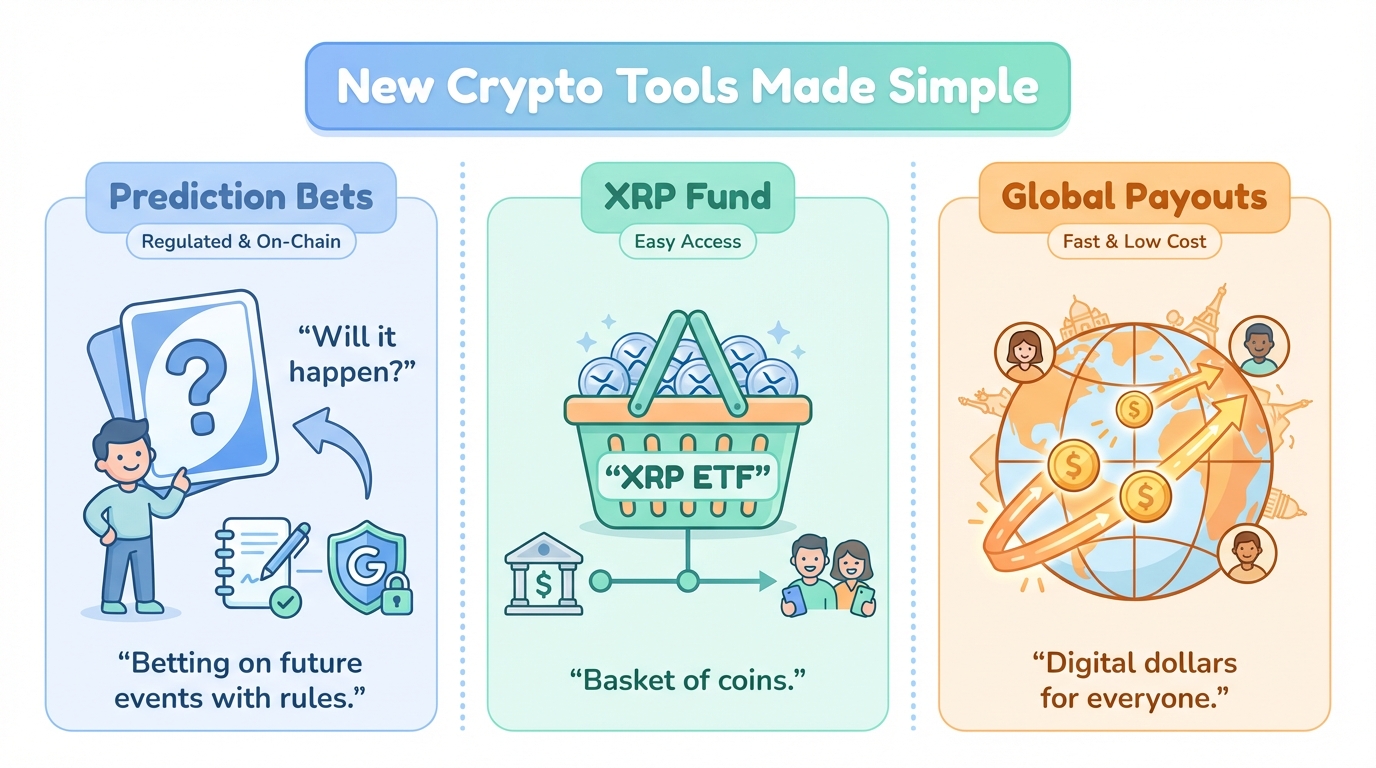
Jon: Let’s fact-check first. The input talks about 21Shares launching a spot XRP ETF in the U.S., but current sources like CNBC and others don’t confirm that for December 2025— it appears outdated or speculative. XRP, from Ripple, uses a federated consensus for fast, low-cost transactions, but no verified ETF launch ties to recent Do Kwon sentencing either. Instead, the real story is this AFT critique. The bill aims to structure crypto markets, potentially allowing more blockchain-based assets into retirement funds. AFT argues it could expose pensions to crypto’s volatility. Think of blockchain here as a tool for transparent ledgers, but integrating it into regulated sectors like retirement brings risks.
Lila: So, it’s about balancing innovation with safety. How does the tech play in?
Jon: Spot on. Crypto like Ethereum (with proof-of-stake consensus, where holders ‘stake’ coins to validate transactions) enables smart contracts—self-executing code for things like automated payouts. But the AFT highlights risks: A crypto collapse, as discussed in recent analyses, could erase value in enterprise blockchain strategies. The impact? It pushes for better regulation, ensuring tech adoption doesn’t endanger savings. For learning smart contracts, tools like Nolang can help chat through coding basics. Remember, crypto’s high risks mean it’s not for everyone, especially retirement funds.
Lila: Got it. So, regulation is key to safe adoption.
Jon: Yes, and with predictions of Bitcoin rallying to $111K by end of December if it breaks $93K, the debate intensifies. But always prioritize risk awareness.
Stablecoins and Global Payouts: How Blockchain is Streamlining Everyday Finance Amid Market Dips
Jon: Finally, let’s talk stablecoins, Lila. While the market dips, there’s buzz around integrations like potential USDT expansions, but fact-checking the input’s MassPay USDT to 230+ countries—sources don’t confirm that specific announcement for December 2025. Instead, ongoing trends show stablecoins like USDT (pegged to the USD) surging in utility for cross-border payments, powered by blockchain for speed and low fees.
Lila: Stablecoins sound less scary than volatile ones. Explain—what are they, and why the surge?
Jon: Great question. Stablecoins are cryptocurrencies designed to maintain a stable value, often backed by reserves like USD. USDT runs on multiple blockchains like Ethereum (using layer-2 solutions for scalability—think L2 as express lanes on a highway to handle more traffic cheaply) and Tron for fast transactions. The input mentioned Plasma integration, but verified news focuses on broader adoption, like stablecoin market cap swelling despite Bitcoin’s stall. This tech enables seconds-fast remittances vs. days for traditional banks, with potential for 10x volume growth. The “so what”? It democratizes finance, but high risks remain if pegs break or regulations tighten.
Lila: Cool, like digital cash without the wild swings. How does this fit with current market news?
Jon: Precisely. Amid Bitcoin retreating toward $90,000 ahead of Fed decisions, stablecoins provide stability. Reports predict the entire financial market moving to blockchain within two years, per SEC insights. For visualizing this, you could use Revid.ai to turn explanations into short videos. But always remember, even stablecoins carry risks like regulatory changes or reserve issues.
Lila: Thanks, Jon. This really highlights the practical side of blockchain.
| Top Story | Key Highlight | Tech/Impact Focus |
|---|---|---|
| Bitcoin’s 2025 Rollercoaster | Dips below $90K amid AI worries | Proof-of-work resilience; high volatility risks |
| AFT Slams Crypto Bill | Warns of retirement risks | Regulation for safe blockchain adoption |
| Stablecoin Surge in Finance | Potential for global payouts | L2 scalability; utility vs. peg risks |
In summary, today’s crypto news paints a picture of a market in flux, with Bitcoin facing headwinds, regulatory debates heating up, and blockchain tech advancing in practical ways like stablecoins. These developments matter because they signal how decentralized systems could integrate into daily life, from faster payments to more secure data. But let’s be clear: Cryptocurrency is highly volatile and involves significant risks, including total loss of investment. Always do your own research (DYOR) and consider consulting experts. To automate your learning workflows, like connecting news feeds to summaries, try Make.com. Stay curious, stay safe!

👨💻 Author: SnowJon (Web3 & AI Practitioner / Investor)
A researcher who leverages knowledge gained from the University of Tokyo Blockchain Innovation Program to share practical insights on Web3 and AI technologies. While working as a salaried professional, he operates 8 blog media outlets, 9 YouTube channels, and over 10 social media accounts, while actively investing in cryptocurrency and AI projects.
His motto is to translate complex technologies into forms that anyone can use, fusing academic knowledge with practical experience.
*This article utilizes AI for drafting and structuring, but all technical verification and final editing are performed by the human author.
⚠️ IMPORTANT RISK WARNING
Cryptocurrency investments are highly volatile and high-risk. You could lose your entire investment. Past performance is not indicative of future results. This content is for educational and informational purposes only and does NOT constitute financial advice. Always do your own research (DYOR) before making any decisions.
🛑 Affiliate Disclaimer
This article contains affiliate links. Tools mentioned are based on current information. Use at your own discretion.
▼ Recommended Tools for Research & Productivity
- 🔍 Genspark: An AI agent that saves you research time by summarizing search results.
- 📊 Gamma: Create beautiful presentations and docs in seconds just by typing.
- 🎥 Revid.ai: Turn your text or blogs into viral short videos instantly.
- 👨💻 Nolang: Learn coding or any topic by chatting with an AI tutor.
- ⚙️ Make.com: Automate boring tasks by connecting your favorite apps.