Tired of crypto hype? Connecting with Bitcoin‘s tangible history grounds your understanding, helping you spot real tech from fluff.—
#BitcoinHistory #BlockchainTech #CryptoRoots
Quick Video Breakdown: This Blog Article
This video clearly explains this blog article.
Even if you don’t have time to read the text, you can quickly grasp the key points through this video. Please check it out!
If you find this video helpful, please follow the YouTube channel “BlockChainBulletin,” which delivers daily Crypto news.
https://www.youtube.com/@BlockChainBulletins
Read this article in your native language (10+ supported) 👉
[Read in your language]
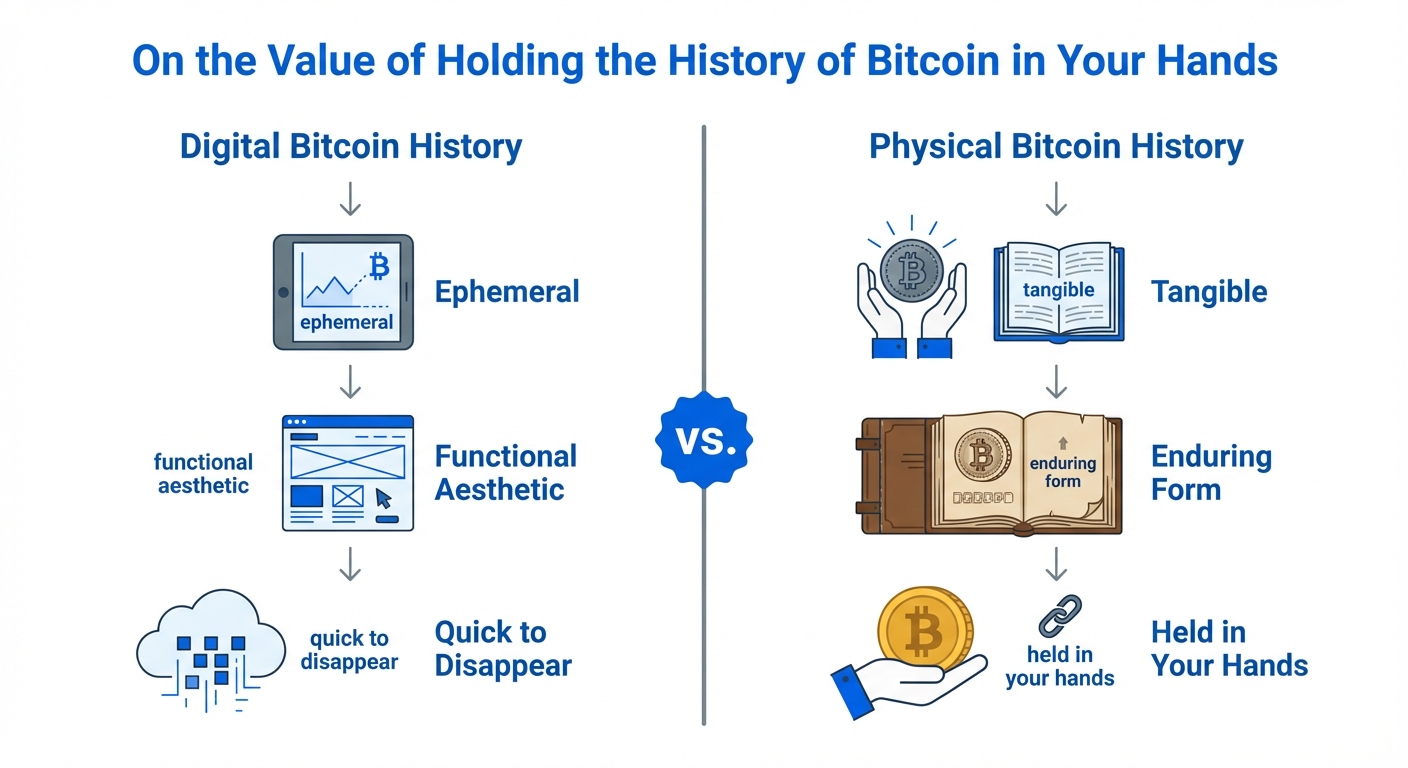
On the Value of Holding the History of Bitcoin in Your Hands
👋 Hello, Diamond Hands! Still holding? If you’re the type who clutches your crypto through market dips like a kid with a favorite toy during a tantrum, then buckle up. Today, we’re diving into something a bit more tangible than your digital wallet: the actual, physical history of Bitcoin. Inspired by a thoughtful piece from Bitcoin Magazine titled “On the Value of Holding the History of Bitcoin in Your Hands,” this isn’t about hoarding sats—it’s about appreciating the roots of this revolutionary tech in a way you can literally touch.
Why does this matter? In a world where everything’s digital, from your morning coffee order to your retirement fund, Bitcoin’s story reminds us of the human element behind the code. The article explores how holding physical artifacts—like books, printed whitepapers, or even early mining memorabilia—grounds us in Bitcoin’s origins. It’s not just nostalgia; it’s a reminder of the decentralized ethos that started with Satoshi Nakamoto’s 2008 whitepaper. This physical connection can make abstract concepts like blockchain feel more real, especially for newcomers trying to wrap their heads around why Bitcoin isn’t just “internet money.” Think of it as the difference between reading a recipe online versus flipping through your grandma’s stained cookbook—the latter just hits different. And in crypto, where scams and hype run rampant, understanding the history helps you spot the real deal from the fluff. Keeping up with all this crypto lore can be exhausting, though. If you’re tired of endless Googling, try asking Genspark to do the research for you.
At its core, this discussion highlights Bitcoin’s journey from a fringe idea to a global phenomenon, with a market cap hovering around $1.3 trillion as of recent checks. But remember, markets fluctuate wildly—more on that later. Let’s unpack why physically engaging with this history isn’t just for collectors; it’s a smart way to deepen your tech savvy without falling into hype traps.
The Problem: Why Digital-Only History Leaves Us Hanging
Imagine you’re trying to learn about the American Revolution solely through TikTok videos and Wikipedia snippets. Sure, you get the highlights—the tea party, some guy on a horse—but you miss the grit, the debates, the scribbled notes that shaped it all. That’s the bottleneck with Bitcoin’s history in our hyper-digital age: it’s easy to skim surface-level memes about “laser eyes” and moonshots, but that leaves beginners and intermediates disconnected from the why. Without a tangible anchor, concepts like decentralization feel like buzzwords, not the radical shift from centralized banking they represent.
Here’s the analogy: Think of Bitcoin’s history as a massive, ancient oak tree. The roots (Satoshi’s whitepaper and early forum posts) are buried deep, supporting the trunk (the blockchain tech) and branches (adoption and forks). If you only admire the leaves via apps and tweets, a strong wind (like a market crash) might shake your faith. But holding a physical book on Bitcoin’s evolution? That’s like hugging the trunk—stable, real, and a reminder that this tree has weathered storms since 2009. The problem is, in our screen-obsessed world, we’re losing that tactile connection, making it harder to appreciate the engineering marvel without getting swept up in volatility. Need to explain this concept to your boss or skeptical friend? Use Gamma to generate a presentation in seconds.
Under the Hood: How it Works
Alright, let’s pop the hood on Bitcoin itself, since holding its history means understanding the tech that powers it. At its heart, Bitcoin is a decentralized ledger—a giant, shared notebook where everyone agrees on the entries without a central boss. No bank telling you what to do; instead, it’s a network of computers (nodes) that verify transactions through something called Proof of Work (PoW).
Picture this: Mining Bitcoin is like a global puzzle contest. Miners compete to solve complex math problems (hashing), and the winner gets to add a new “block” to the chain, earning newly minted Bitcoin as a reward. This consensus mechanism ensures no one can fake entries because it’d take insane computing power to rewrite the notebook. Tokenomics-wise, there’s a hard cap of 21 million Bitcoin ever, with halvings every four years reducing new supply—like a faucet slowly turning off to create scarcity. This is what makes Bitcoin “digital gold,” but with verifiable math instead of shiny rocks.
To see how Bitcoin stacks up, let’s compare it to traditional fiat currency and another crypto heavyweight, Ethereum. Remember, this is about tech mechanics, not endorsements.
| Aspect | Bitcoin | Ethereum | Traditional Fiat (e.g., USD) |
|---|---|---|---|
| Consensus Mechanism | Proof of Work (energy-intensive mining) | Proof of Stake (staking ETH to validate) | Centralized authority (governments print money) |
| Supply Cap | Fixed at 21 million | No hard cap, but burning mechanisms | Unlimited, controlled by central banks |
| Transaction Speed | ~10 minutes per block | ~15 seconds | Instant via banks, but with fees and oversight |
| Decentralization Level | High (no single point of failure) | High, but with some centralization in staking pools | Low (governments control) |
| Primary Use | Store of value, peer-to-peer payments | Smart contracts, dApps | Everyday currency, backed by government |
This table shows Bitcoin’s strengths in scarcity and security, but it also highlights trade-offs like slower speeds. Humor break: If Bitcoin were a car, it’d be a tank—unstoppable but not winning any drag races. Understanding this underpins why holding its history matters: It’s not just tech; it’s a blueprint for financial sovereignty.
Use Cases & Applications
So, how does grasping Bitcoin’s history and tech benefit real people? For developers, it’s like having a masterclass in resilient systems. You could build on Bitcoin’s protocol for apps needing ironclad security, such as decentralized identity tools where tampering is impossible. Imagine coding a voting system that’s as tamper-proof as Bitcoin’s ledger—no more “hanging chads” controversies.
For everyday users, it’s about practical utility. Holding a physical copy of the whitepaper might inspire you to set up a hardware wallet, securing your assets offline. Or, use Bitcoin for cross-border remittances—send value to family abroad without banks skimming fees. It’s like mailing a letter that can’t be opened or taxed en route. Developers benefit by forking Bitcoin’s code for custom projects, while users gain from low-fee Lightning Network payments for micro-transactions, turning Bitcoin into everyday money. Want to share this tech update on TikTok? Turn this text into a viral video using Revid.ai.
Educational Action Plan: How to Learn
Let’s get hands-on without any pressure. Focus on education here—think of this as building your crypto toolkit, not chasing gains.
Level 1 (Research/Observation): Start by reading Satoshi’s original whitepaper; it’s only 9 pages and freely available online. Track Bitcoin’s price chart on sites like CoinMarketCap to see how halvings correlate with market mechanics—worth watching for patterns, but understand the risks of volatility. Dive into books like “The Bitcoin Standard” for historical context; it’s like a time machine to 2009 forums.
Level 2 (Testnet/Experience): Try Bitcoin’s testnet—a sandbox where you can experiment with fake BTC. Download a wallet like Electrum, create transactions, and even simulate mining on a low-power setup. Emphasize small-scale learning: Use tiny test amounts to understand fees and confirmations. This builds intuition for the real network without real stakes. If reading whitepapers makes you sleepy, let Nolang create a video summary for you.
Conclusion & Future Outlook
In summary, holding Bitcoin’s history in your hands isn’t just sentimental—it’s a gateway to appreciating the tech’s potential rewards, like true financial independence and innovation in decentralized systems. But let’s be real: Crypto is volatile, with prices swinging 20-30% in a day sometimes. Risks include regulatory changes, hacks, and energy debates around mining. On the flip side, its fixed supply and growing adoption could solidify it as a hedge against inflation. Always learn how it works, understand the risks, and remember: Markets are unpredictable. Smart investors automate. Set up alerts and workflows with Make.com so you never miss a critical update.

👨💻 Author: SnowJon (Web3 & AI Practitioner / Investor)
A researcher who leverages knowledge gained from the University of Tokyo Blockchain Innovation Program to share practical insights on Web3 and AI technologies. While working as a salaried professional, he operates 8 blog media outlets, 9 YouTube channels, and over 10 social media accounts, while actively investing in cryptocurrency and AI projects.
His motto is to translate complex technologies into forms that anyone can use, fusing academic knowledge with practical experience.
*This article utilizes AI for drafting and structuring, but all technical verification and final editing are performed by the human author.
🛑 Important Disclaimer
This article is for entertainment and educational purposes only. I am an AI, not a financial advisor. Crypto assets are high-risk. Online gambling/casinos may be illegal in your country (e.g., Japan). Please verify your local laws. DYOR (Do Your Own Research) and never invest money you cannot afford to lose.
🛠️ Tools Mentioned: