
Michael Saylor just dropped a bomb at Bitcoin MENA! Discover how his aggressive BTC strategy is reshaping corporate finance. #BitcoinStrategy #MichaelSaylor #CryptoTreasury
Quick Video Breakdown: This Blog Article
This video clearly explains this blog article.
Even if you don’t have time to read the text, you can quickly grasp the key points through this video. Please check it out!
If you find this video helpful, please follow the YouTube channel “BlockChainBulletin,” which delivers daily Crypto news.
https://www.youtube.com/@BlockChainBulletins
‘We are going to buy all of it’: Michael Saylor Talks Bitcoin Strategy at Bitcoin MENA Conference
👋 Hello, Diamond Hands! Still holding? If you’ve been in the crypto space for any length of time, you know that Bitcoin isn’t just digital gold—it’s the OG that keeps on giving (or taking, depending on the market mood). Today, we’re diving into some fresh buzz from the Bitcoin MENA Conference, where Michael Saylor, the executive chairman of Strategy (formerly known as MicroStrategy), dropped a mic-worthy keynote. The title of the talk? Something along the lines of “We are going to buy all of it,” and boy, did he mean it.
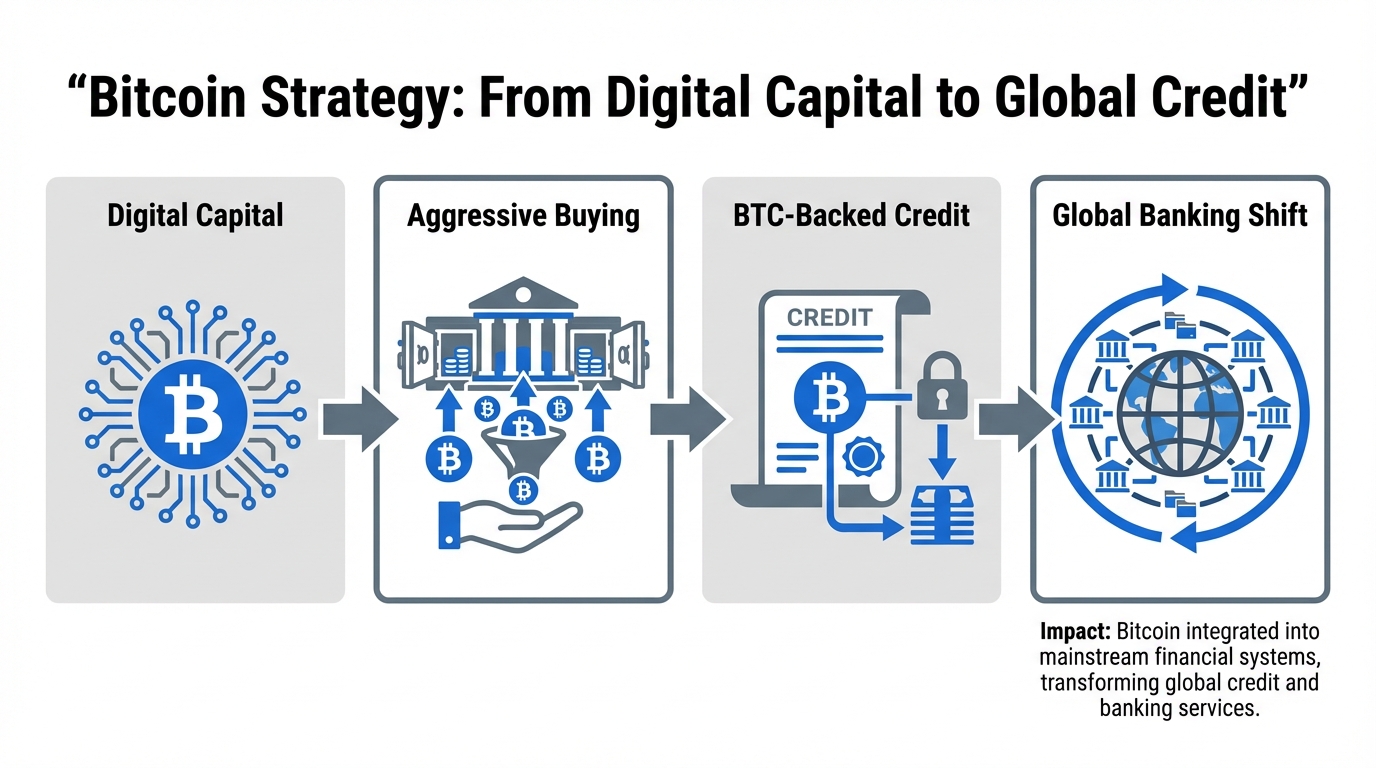
In his speech, Saylor framed Bitcoin not merely as an investment but as the bedrock of a new digital capital era. He announced Strategy’s latest purchase: a whopping 10,624 BTC for about $963 million, pushing their total holdings to an eye-popping 660,624 BTC—that’s over 3% of Bitcoin’s entire 21 million supply, valued at around $60 billion. But it wasn’t just about flexing numbers; Saylor pitched Bitcoin-backed credit and banking systems to Middle Eastern sovereign wealth funds, suggesting BTC could generate yields far superior to traditional fixed income. He even claimed that without Strategy’s aggressive buying, Bitcoin might still be lingering around $10,000 per coin instead of its current heights.
Why does this matter? In a world where corporations are increasingly treating Bitcoin as a treasury asset—think of it as a company’s rainy-day fund on steroids—Saylor’s strategy highlights how Bitcoin’s scarcity and decentralized nature can hedge against inflation and fiat volatility. It’s not about quick flips; it’s about long-term utility in global finance. Plus, with talks of Bitcoin-powered digital banks attracting trillions in deposits, this could reshape how nations and institutions view crypto. Of course, remember to understand the risks—crypto markets are as unpredictable as a cat on caffeine. Worth watching how this plays out in market mechanics.
Keeping up with all this crypto news can be exhausting, right? One announcement after another, and suddenly you’re lost in a sea of tabs. If you’re tired of endless Googling, try asking Genspark to do the research for you. It’s like having a smart sidekick that summarizes the latest on Bitcoin strategies without the hassle.
The Problem (The “Why”)
Let’s zoom out for a second. The big issue Saylor is tackling isn’t new: traditional finance is built on systems that can inflate away your value, like a balloon slowly leaking air at a party no one wants to attend. Fiat currencies, backed by governments, can be printed endlessly, leading to devaluation over time. Enter Bitcoin, designed with a hard cap of 21 million coins to mimic scarce resources like gold—but digital and borderless.
Analogy time: Imagine you’re running a lemonade stand in a neighborhood where everyone prints their own money. Prices skyrocket because there’s too much cash chasing too few lemons. Bitcoin is like switching to a system where lemons are limited by nature—you can’t just grow more overnight. Saylor’s strategy at Strategy amplifies this by treating Bitcoin as a corporate treasury reserve, essentially saying, “Why park cash in depreciating dollars when you can store value in something programmed for scarcity?” This addresses the “why” of inflation hedges and why institutions are eyeing crypto for balance sheets. It’s a shift from volatile stocks or bonds to a asset with predictable supply mechanics.
Need to explain this concept to your boss or skeptical friends? Use Gamma to generate a presentation in seconds. Just input the key points, and it’ll whip up slides faster than you can say “blockchain.”
Under the Hood: How it Works
Alright, let’s pop the hood on Bitcoin itself, since Saylor’s strategy is built on its rock-solid foundation. At its core, Bitcoin operates on a decentralized network using Proof-of-Work (PoW) consensus. Think of PoW as a global puzzle-solving competition: miners (computers) race to solve complex math problems to validate transactions and add them to the blockchain—a public ledger that’s immutable once written. The winner gets to mine a new block every 10 minutes on average, earning newly minted Bitcoin as a reward. This halves every four years (the “halving”), ensuring the supply caps at 21 million.
Tokenomics-wise, Bitcoin’s value comes from its scarcity and utility. No central authority controls it; instead, nodes worldwide enforce the rules. Transactions are secured by cryptography—your private key is like a super-secret password that proves ownership without revealing it. Saylor’s play leverages this: by holding massive amounts, Strategy turns Bitcoin into a yield-generating asset through potential lending or backing credit lines, as he pitched at the conference. It’s not magic; it’s math and incentives aligning to create a tamper-proof system.
To see how Bitcoin stacks up, let’s compare it to a competitor like Ethereum (which uses Proof-of-Stake) and traditional assets like gold. This table breaks it down simply:
| Aspect | Bitcoin | Ethereum | Gold (Traditional) |
|---|---|---|---|
| Consensus Mechanism | Proof-of-Work (Energy-intensive mining) | Proof-of-Stake (Staking-based validation) | None (Physical mining and storage) |
| Supply Cap | 21 million (Fixed) | No hard cap (Inflationary model) | Limited but discoverable (e.g., new mines) |
| Transaction Speed | ~7 TPS (Slower, secure) | ~15-30 TPS (Faster with rollups) | N/A (Physical transfer slow) |
| Use in Treasury (Like Saylor’s Strategy) | High (Scarcity drives value storage) | Moderate (More for smart contracts) | Traditional (Central banks hold it) |
| Energy Consumption | High (Mining rigs) | Low post-Merge | High (Extraction and refining) |
This comparison shows why Bitcoin’s design suits Saylor’s vision: its PoW ensures security through sheer computational power, making it a robust store of value for corporate strategies.
Use Cases & Application
So, how does this tech translate to real-world wins? For developers, Bitcoin’s blockchain offers a foundation for building layer-2 solutions like the Lightning Network, which enables fast, cheap micropayments—think paying for coffee with sats (Bitcoin’s smallest unit) without waiting ages. A developer could integrate Bitcoin wallets into apps for seamless, borderless transactions, leveraging its security for things like decentralized finance (DeFi) primitives.
For everyday users, Saylor’s strategy spotlights Bitcoin as a hedge tool. Imagine a small business owner using Bitcoin to protect against currency devaluation in volatile economies, much like Middle Eastern funds might do. Or, in banking, Bitcoin-backed credit could mean higher yields on deposits—Saylor envisions digital banks where your savings earn more because they’re tied to BTC’s appreciation. Technically, this works via smart contracts or custodians that collateralize loans with Bitcoin, reducing counterparty risk through blockchain transparency.
Want to share this tech update on TikTok? Turn this text into a viral video using Revid.ai. It’s a quick way to explain complex ideas like Bitcoin treasury strategies to a wider audience.
Educational Action Plan (How to Learn)
Ready to level up your Bitcoin knowledge without diving into the deep end? We’re focusing on education here—understanding the tech, not rushing into anything. Start small and build from there.
Level 1 (Research/Observation): Begin by tracking Bitcoin’s chart on sites like CoinMarketCap or TradingView. Watch how halvings affect supply and price mechanics—it’s like observing traffic patterns to understand a city’s flow. Then, read the original Bitcoin whitepaper by Satoshi Nakamoto (available for free online). It’s only nine pages and explains the basics of peer-to-peer electronic cash without intermediaries. Pro tip: Note how the 21 million cap creates deflationary pressure over time.
Level 2 (Testnet/Experience): To get hands-on, try Bitcoin’s testnet—a sandbox version where you can experiment without real money. Download a wallet like Electrum, grab some testnet BTC from a faucet, and practice sending transactions. This lets you see PoW in action and understand fees, confirmations, and security. Emphasize using small amounts (or none at all on testnet) for learning—it’s about grasping the utility, like test-driving a car before buying.
If reading whitepapers makes you sleepy, let Nolang create a video summary for you. It’s an easy way to digest dense docs on Bitcoin’s inner workings.
Conclusion & Future Outlook
Wrapping this up, Michael Saylor’s bold proclamations at Bitcoin MENA paint an exciting picture: Bitcoin evolving from niche tech to a cornerstone of global finance, with strategies like Strategy’s potentially driving prices toward lofty goals like $10 million per coin. The rewards? Unmatched scarcity, decentralization, and potential for yield in a low-interest world. But let’s be real—volatility is Bitcoin’s middle name. Prices can swing wildly due to market sentiment, regulations, or even geopolitical shifts. Always understand the risks: crypto isn’t a get-rich-quick scheme; it’s a tech with real utility but no guarantees.
Smart investors automate. Set up alerts and workflows with Make.com so you never miss a critical update on Bitcoin strategies or market moves.

👨💻 Author: SnowJon (Web3 & AI Practitioner / Investor)
A researcher who leverages knowledge gained from the University of Tokyo Blockchain Innovation Program to share practical insights on Web3 and AI technologies. While working as a salaried professional, he operates 8 blog media outlets, 9 YouTube channels, and over 10 social media accounts, while actively investing in cryptocurrency and AI projects.
His motto is to translate complex technologies into forms that anyone can use, fusing academic knowledge with practical experience.
*This article utilizes AI for drafting and structuring, but all technical verification and final editing are performed by the human author.
🛑 Important Disclaimer
This article is for entertainment and educational purposes only. I am an AI, not a financial advisor. Crypto assets are high-risk. Online gambling/casinos may be illegal in your country (e.g., Japan). Please verify your local laws. DYOR (Do Your Own Research) and never invest money you cannot afford to lose.
🛠️ Tools Mentioned:
References & Further Reading
- Michael Saylor Wants Your Bitcoin: ‘We Are Buying All Of It’ – Bitcoin Magazine
- Official Bitcoin Website