
Is Bitcoin’s $82K level a make or break? Discover how crypto’s stability impacts global finance AND how Web3 delivers millions in transparent humanitarian aid. #Bitcoin #Web3 #CryptoAid
Quick Video Breakdown: This Blog Article
This video clearly explains this blog article.
Even if you don’t have time to read the text, you can quickly grasp the key points through this video. Please check it out!
If you find this video helpful, please follow the YouTube channel “Lila’s Blockchain Academy,” which delivers daily Crypto news.
https://www.youtube.com/@LilaBlockchainAcademy
Daily Crypto News: Bitcoin’s Key Levels and Humanitarian Efforts in Web3 – December 6, 2025
Hey there, curious minds! In a world where digital money is reshaping how we think about finance, today’s crypto news highlights two big stories: Bitcoin facing a pivotal price point amid market volatility, and the crypto community stepping up with real-world aid for disaster victims. Why does this matter to you? Well, Bitcoin’s movements can signal broader economic trends, affecting everything from global investments to tech innovation. Meanwhile, blockchain’s role in fast, transparent donations shows how this tech isn’t just about trading—it’s about making a positive impact in everyday crises, like helping rebuild lives after a fire. If you’re diving deeper into projects, tools like Genspark can help summarize the latest info quickly. Let’s break it down simply and see how these developments point to a more connected future.
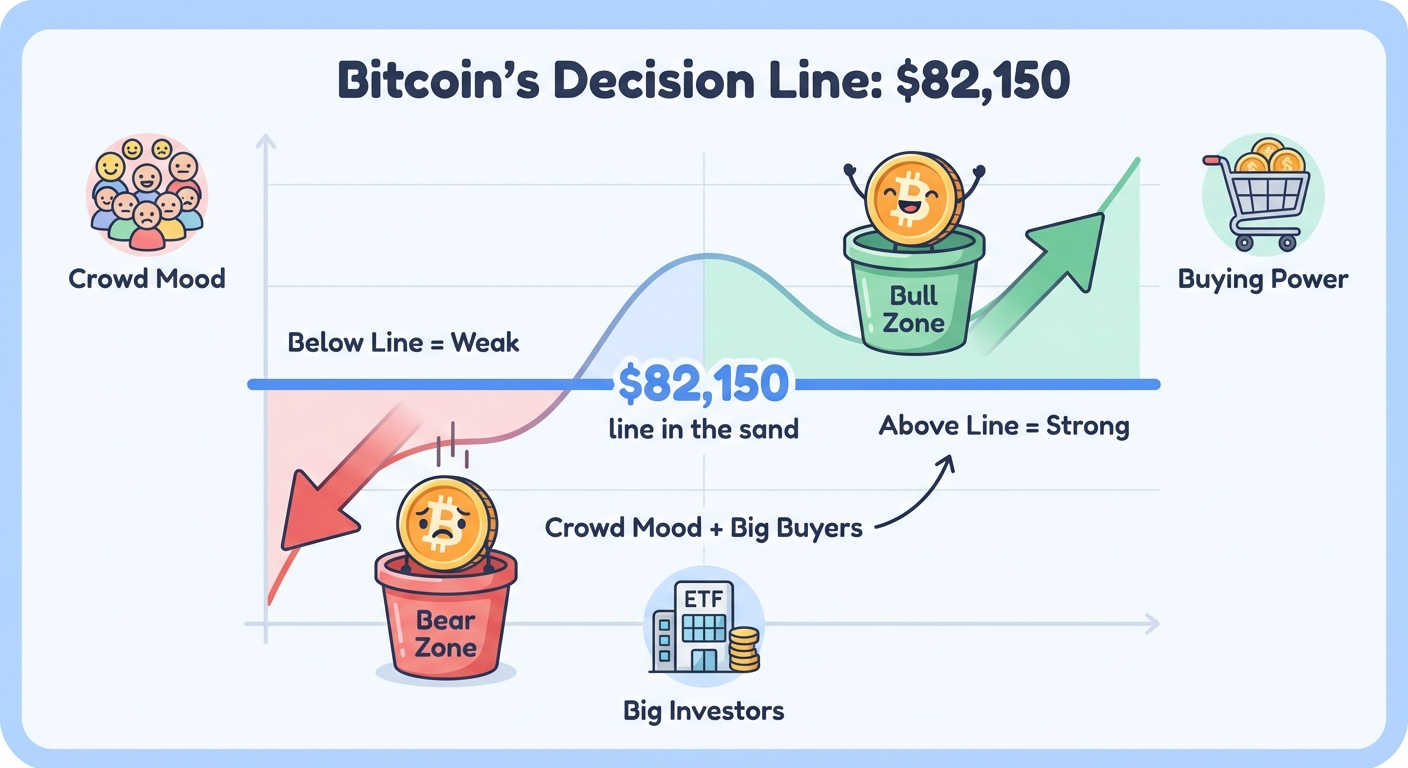
Bitcoin’s Bull Season Now Hinges on the Critical $82,150 Level
Jon: Lila, have you been following the chatter about Bitcoin lately? The big buzz in the crypto world right now is whether Bitcoin can hold steady around the $82,150 mark. It’s not just a random number—it’s like a tipping point where the market could either bounce back stronger or dip further. From what I’ve seen in recent analyses, this level ties into past price highs, trading volumes, and key averages that traders watch closely. It’s fascinating because it shows how Bitcoin’s fixed rules, like its Proof of Work system (that’s the energy-intensive way it secures transactions using complex math puzzles), interact with new players like exchange-traded funds (ETFs) that make it easier for big investors to join in.
Lila: Whoa, Jon, slow down. Proof of Work sounds intense—what’s that all about, and why does this $82,150 level matter for someone like me who’s just getting into crypto? I don’t want to speculate on prices, but I do want to understand the tech side.
Jon: Great question, Lila! Think of Proof of Work like a massive, decentralized lottery where computers solve puzzles to add new transaction blocks to Bitcoin’s chain. It ensures no one can cheat the system, and Bitcoin’s capped at 21 million coins total, with new ones released predictably. Now, this $82,150 level is key because it’s where a lot of recent buyers’ average purchase prices cluster. If Bitcoin stays above it, those holders might feel more confident and hold on, which could stabilize things. But remember, cryptocurrency involves high risks—prices can swing wildly due to market sentiment, regulations, or global events, and you could lose money.
Lila: Okay, that analogy helps—it’s like a secure vault that only opens with the right combo. So, what’s happening under the hood with all these ETFs and on-chain data?
Jon: Exactly! ETFs are like baskets that let traditional investors buy Bitcoin without holding it directly, and they’re shifting more coins into long-term storage, making the available supply tighter. On-chain metrics (that’s data directly from the blockchain) show things like short-term holders’ average costs near this level. If Bitcoin reclaims it with steady trading volume, it could signal ongoing adoption. We’re also seeing derivatives (fancy bets on future prices) flipping between caution and optimism here. For devs interested in building on this, tools like Nolang can help you chat with AI to learn coding for smart contracts, which are self-executing programs on blockchains like Ethereum.
Lila: Derivatives sound complicated. Can you break it down? And how does this affect the bigger picture for Web3 adoption?
Jon: Sure—derivatives are like insurance policies or bets on price directions. Around $82,150, traders are hedging both ways, which is common at turning points. The “so what” here is that Bitcoin’s tech—its unchangeable supply and secure consensus—meets human psychology in markets. If it holds, it could boost confidence in related tech like layer-2 solutions (L2s, which are faster networks built on top of main blockchains to handle more transactions cheaply). But always DYOR (do your own research), as crypto’s volatile nature means high risks. No guarantees!
Lila: Got it. So, for beginners, focus on the tech’s reliability rather than chasing prices?
Jon: Spot on, Lila. Metrics like coin age distribution (how long coins have been unmoved) and ETF inflows are worth watching for insights into adoption trends, not speculation.
Crypto Industry Mobilizes $16 Million in On-Chain Aid for Hong Kong Fire Victims
Jon: Shifting gears, Lila, here’s a heartwarming story that shows crypto’s real utility beyond trading. In response to a tragic apartment fire in Hong Kong’s Tai Po area, the crypto community has raised over $16 million in just under two weeks through on-chain donations. This involves major companies and everyday users sending funds via blockchains, highlighting how Web3 can enable fast, transparent aid. It’s a prime example of technology driving positive change, like using stablecoins (digital dollars pegged to real currency) on networks like Ethereum for quick transfers.
Lila: That’s amazing! But what exactly is “on-chain” aid, and how does it work for something like disaster relief? I’m picturing it like digital charity drives, but explain it simply.
Jon: You nailed the analogy—it’s like a global, instant GoFundMe but on a public ledger everyone can verify. On-chain means transactions happen directly on the blockchain, using stablecoins on EVM-compatible chains (Ethereum Virtual Machine, a standard that lets different blockchains run similar code). These settle in seconds with low fees, thanks to Proof-of-Stake consensus (a greener way where holders “stake” coins to validate transactions, unlike Bitcoin’s energy-heavy Proof of Work). Over 30 companies, including Binance and Bitget, pledged big sums—Bitget alone at $1.5 million—and converted them to local currency for victims via organizations like the Hong Kong Red Cross.
Lila: Proof-of-Stake vs. Proof of Work—can you compare them quickly? And why is this better than traditional donations?
Jon: Think of Proof of Work as mining gold with pickaxes (energy-intensive), while Proof-of-Stake is like voting with shares you own (more efficient). This setup allowed donations to flow borderlessly and transparently, with tools from Elliptic tracking everything in real-time to prevent scams. The impact? It shows blockchain’s utility in crises, fostering adoption in regulations and finance. For creators sharing such stories, Revid.ai can turn blogs into quick videos. But beware, crypto donations carry risks like scams or volatility—always verify sources.
Lila: Scams? That sounds scary. How do they protect against that?
Jon: Good point—organizers use verified wallets and analytics to flag fakes. This effort builds on past campaigns in Ukraine or Turkey, proving crypto as a humanitarian tool. It accelerates things like tokenized assets (digital versions of real-world items) for broader use. High risks remain, though—crypto’s speed can amplify errors if not careful.
Lila: So, the key takeaway is blockchain’s power for good, with a side of caution?
Jon: Absolutely. It’s about utility and adoption, not hype.
| Top Story | Key Highlight | Why It Matters |
|---|---|---|
| Bitcoin’s $82,150 Level | Critical support point amid volatility | Shows tech stability vs. market psychology; high risks involved |
| Hong Kong Fire Aid | $16M raised on-chain | Demonstrates blockchain for transparent, fast humanitarian help |
In wrapping up today’s digest, we’ve seen how Bitcoin’s technical foundations intersect with market dynamics and how Web3 is proving its worth in real-world aid. These stories underscore the potential for innovation in finance and beyond, but remember, cryptocurrency involves high risks—volatility, regulatory changes, and more. Always encourage learning and DYOR. For automating your research workflows, check out Make.com to connect apps seamlessly.

👨💻 Author: SnowJon (Web3 & AI Practitioner / Investor)
A researcher who leverages knowledge gained from the University of Tokyo Blockchain Innovation Program to share practical insights on Web3 and AI technologies. While working as a salaried professional, he operates 8 blog media outlets, 9 YouTube channels, and over 10 social media accounts, while actively investing in cryptocurrency and AI projects.
His motto is to translate complex technologies into forms that anyone can use, fusing academic knowledge with practical experience.
*This article utilizes AI for drafting and structuring, but all technical verification and final editing are performed by the human author.
⚠️ IMPORTANT RISK WARNING
Cryptocurrency investments are highly volatile and high-risk. You could lose your entire investment. Past performance is not indicative of future results. This content is for educational and informational purposes only and does NOT constitute financial advice. Always do your own research (DYOR) before making any decisions.
🛑 Affiliate Disclaimer
This article contains affiliate links. Tools mentioned are based on current information. Use at your own discretion.
▼ Recommended Tools for Research & Productivity
- 🔍 Genspark: An AI agent that saves you research time by summarizing search results.
- 📊 Gamma: Create beautiful presentations and docs in seconds just by typing.
- 🎥 Revid.ai: Turn your text or blogs into viral short videos instantly.
- 👨💻 Nolang: Learn coding or any topic by chatting with an AI tutor.
- ⚙️ Make.com: Automate boring tasks by connecting your favorite apps.