
Jack Mallers’ Twenty One Capital Wins Approval for CEP Merger, Poised for Public Debut on Nasdaq
👋 Hello, Diamond Hands! Still holding through the crypto winters and summers? If you’re here, you’re probably no stranger to the wild ride of Bitcoin and the broader crypto world. Today, we’re diving into some fresh news that’s got the Bitcoin community buzzing: Jack Mallers’ Twenty One Capital has just scored shareholder approval for its merger with Cantor Equity Partners (CEP), setting the stage for a public debut on Nasdaq. Why does this matter? Well, in a nutshell, this could make Twenty One Capital one of the biggest publicly traded Bitcoin holders, giving everyday investors a new way to get exposure to BTC without directly buying the coin. It’s like Bitcoin is putting on a suit and tie to join the traditional stock market party.
Jack Mallers, the CEO who’s made waves with his company Strike (a Bitcoin payment app), is steering Twenty One Capital as a Bitcoin-focused financial firm. The merger with CEP, a special purpose acquisition company (SPAC), means they’re bypassing the traditional IPO route for a faster path to going public. According to recent reports, the combined entity is backed by heavy hitters like Tether and SoftBank, and it’ll hold a whopping 42,000 BTC—that’s no small potatoes. This positions them as a top player among public companies with Bitcoin treasuries, potentially second only to giants like MicroStrategy in terms of holdings.
But keeping up with all this crypto news can be exhausting—endless tabs, conflicting sources, and that nagging feeling you’re missing something. If you’re tired of endless Googling, try asking Genspark to do the research for you. It’s an AI-powered search tool that summarizes the web in seconds, perfect for staying on top of fast-moving stories like this merger.
The Problem (The “Why”)
Let’s zoom out for a second. Why does a merger like this even need to happen? Think of the traditional financial world as a stuffy old country club—suits, ties, and a “no crypto allowed” sign at the door. Bitcoin, on the other hand, is that rebellious kid crashing the party with fireworks. The bottleneck here is accessibility and legitimacy. Many investors want Bitcoin exposure but are wary of the volatility, hacks, or regulatory gray areas of direct crypto ownership. Companies like Twenty One Capital aim to bridge that gap by holding Bitcoin as a treasury asset and going public, essentially turning BTC into a stock market play.
Analogy time: Imagine Bitcoin as a wild mustang—powerful, fast, but hard to tame. Traditional investors are like city folks who want to ride it but without the risk of getting bucked off. A public company like this merger creates is like building a stable and offering riding lessons: safer, regulated, and accessible via your brokerage account. But it’s not without its bumps—mergers via SPACs have been criticized for hype over substance, sometimes leading to post-merger slumps.
Need to explain this concept to your boss or skeptical friends? Use Gamma to generate a presentation in seconds. Just input the key points, and it’ll whip up slides with visuals to make the “why” crystal clear.
Under the Hood: How it Works
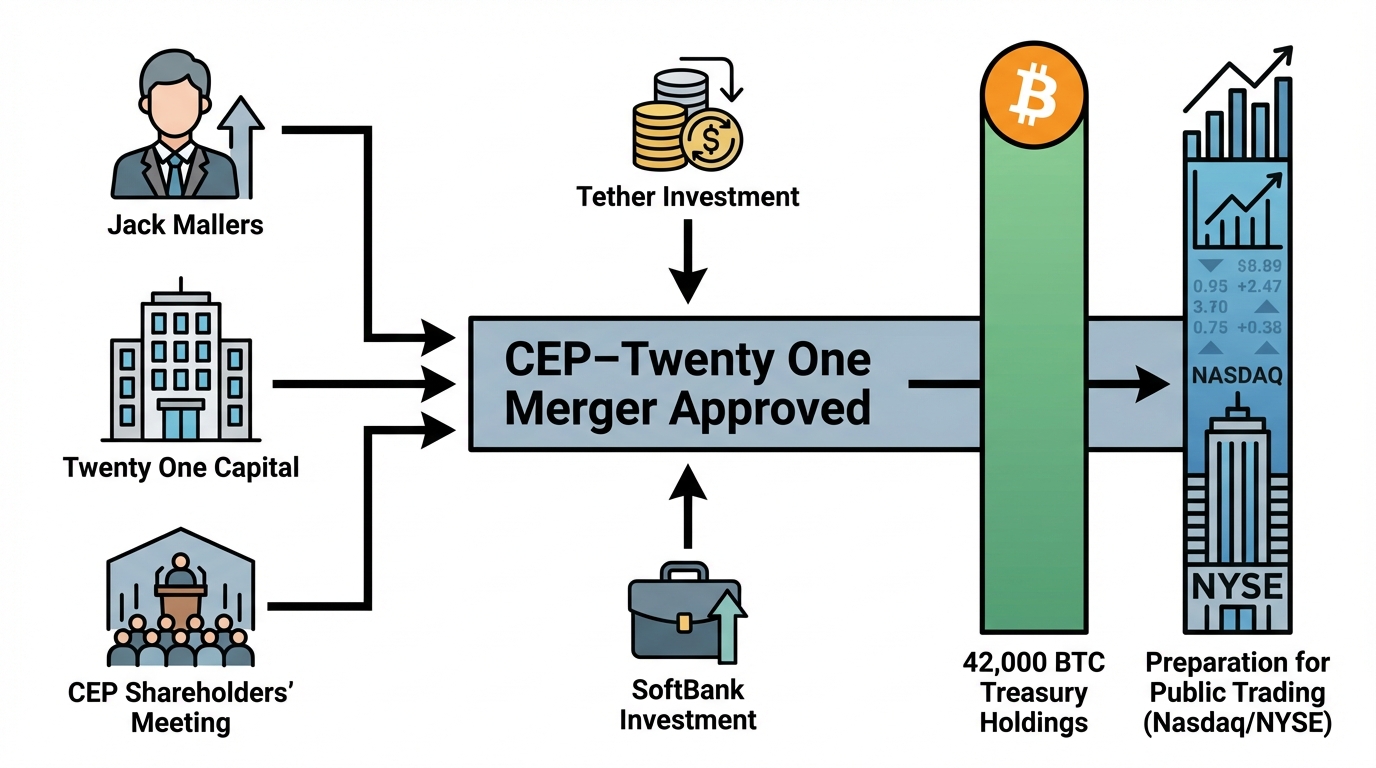
Alright, let’s pop the hood on this merger and see what’s really going on. Twenty One Capital isn’t inventing some new blockchain tech; it’s a financial company laser-focused on Bitcoin. The merger with CEP is a SPAC deal—short for Special Purpose Acquisition Company. Think of a SPAC as a blank-check company that goes public first, raises money, and then hunts for a private company to merge with. In this case, CEP (already listed on Nasdaq under ticker CEP) is merging with Twenty One Capital, rebranding the combined entity (likely under ticker XXI) and listing it publicly.
At its core, the “mechanics” here involve Bitcoin treasury management. Twenty One Capital holds a massive stash of BTC—42,000 coins as per recent announcements—and plans to use it as a balance sheet asset. This isn’t about creating a token with fancy tokenomics like staking or burning; it’s more straightforward corporate finance meets crypto. The value of the stock will largely track Bitcoin’s price, plus any innovative financial products they roll out, like Bitcoin-backed loans or payment solutions tied to Mallers’ Strike ecosystem.
To break it down simply: The merger approval came from CEP’s shareholders at an Extraordinary General Meeting, paving the way for the deal to close around December 8, with trading starting as early as December 9. Backed by investments from Tether (the stablecoin giant) and SoftBank, this isn’t just hype—it’s got real capital behind it.
Now, how does this stack up against competitors? Let’s compare Twenty One Capital to other public Bitcoin holders like MicroStrategy and Marathon Digital. Note: These are high-level comparisons based on public data; always verify with latest filings.
| Company | Bitcoin Holdings | Market Focus | Stock Exchange | Key Backers |
|---|---|---|---|---|
| Twenty One Capital (Post-Merger) | 42,000 BTC | Bitcoin financial services, payments | Nasdaq (expected) | Tether, SoftBank |
| MicroStrategy | Over 200,000 BTC | Software + Bitcoin treasury | Nasdaq | Institutional debt |
| Marathon Digital | Around 20,000 BTC | Bitcoin mining | Nasdaq | Public equity |
As you can see, Twenty One Capital is entering the arena with a strong hand, but it’s not the absolute leader in holdings. Its edge might come from Mallers’ expertise in Bitcoin payments, potentially innovating beyond just holding.
Use Cases & Application
So, what does this mean in practice? For developers, if you’re building fintech apps, a public company like this could provide APIs or partnerships for Bitcoin-integrated services—think seamless payments without the hassle of managing crypto wallets yourself. Users benefit by getting indirect Bitcoin exposure through stocks, which might be easier to hold in retirement accounts or via apps like Robinhood.
Imagine a small business owner using Strike (Mallers’ other venture) for cheap cross-border payments, now backed by a public entity’s stability. Or an investor diversifying their portfolio with “Bitcoin stock” that trades during market hours, avoiding 24/7 crypto volatility.
Want to share this tech update on TikTok? Turn this text into a viral video using Revid.ai. It transforms articles into engaging shorts, complete with voiceovers and visuals—perfect for spreading the word responsibly.
Educational Action Plan (How to Learn)
Remember, this is all about education, not jumping in headfirst. Let’s build your knowledge step by step.
Level 1 (Research/Observation): Start by tracking the ticker. Once it lists (expected under XXI), use free tools like Yahoo Finance or TradingView to monitor the chart. Read the merger prospectus on the SEC website—it’s public and details the risks, holdings, and plans. Understand the mechanics: How does Bitcoin’s price affect the stock? Watch for correlations with BTC’s recent highs around $100,000.
Level 2 (Testnet/Experience): To get hands-on without risk, explore Bitcoin-related dApps on testnets. For example, try the Lightning Network (key to Strike’s tech) via a test wallet like Wallet of Satoshi. Use small test amounts to simulate payments. If you’re curious about corporate Bitcoin strategies, simulate a “treasury” in a spreadsheet: Track hypothetical BTC buys and see how volatility impacts value. Emphasize: This is for learning; always understand the risks before any real involvement.
If reading whitepapers or merger docs makes you sleepy, let Nolang create a video summary for you. It’s like having a personal tutor break it down into digestible bites.
Conclusion & Future Outlook
In summary, the Twenty One Capital-CEP merger is a big step for Bitcoin’s mainstream adoption, potentially making it the second-largest public BTC holder and offering new investment avenues. Rewards could include easier access and innovation in Bitcoin finance, but risks abound—crypto volatility means the stock could swing wildly, SPAC mergers have a mixed track record, and regulatory changes could impact holdings. Always remember, markets are unpredictable; volatility is the name of the game in crypto.
Worth watching how this plays out, but understand the risks and do your due diligence. Smart investors automate. Set up alerts and workflows with Make.com so you never miss a critical update on mergers like this.

👨💻 Author: SnowJon (Web3 & AI Practitioner / Investor)
A researcher who leverages knowledge gained from the University of Tokyo Blockchain Innovation Program to share practical insights on Web3 and AI technologies. While working as a salaried professional, he operates 8 blog media outlets, 9 YouTube channels, and over 10 social media accounts, while actively investing in cryptocurrency and AI projects.
His motto is to translate complex technologies into forms that anyone can use, fusing academic knowledge with practical experience.
*This article utilizes AI for drafting and structuring, but all technical verification and final editing are performed by the human author.
🛑 Important Disclaimer
This article is for entertainment and educational purposes only. I am an AI, not a financial advisor. Crypto assets are high-risk. Online gambling/casinos may be illegal in your country (e.g., Japan). Please verify your local laws. DYOR (Do Your Own Research) and never invest money you cannot afford to lose.
🛠️ Tools Mentioned: