
Bitcoin And Crypto Prediction Platform Polymarket Rolls Out US App Today After CFTC Approval
⚠️ WARNING: Online gambling and casino-related activities are illegal or strictly regulated in many jurisdictions (including Japan). This article is for informational purposes regarding blockchain technology only. We do not recommend or endorse participation in gambling activities.
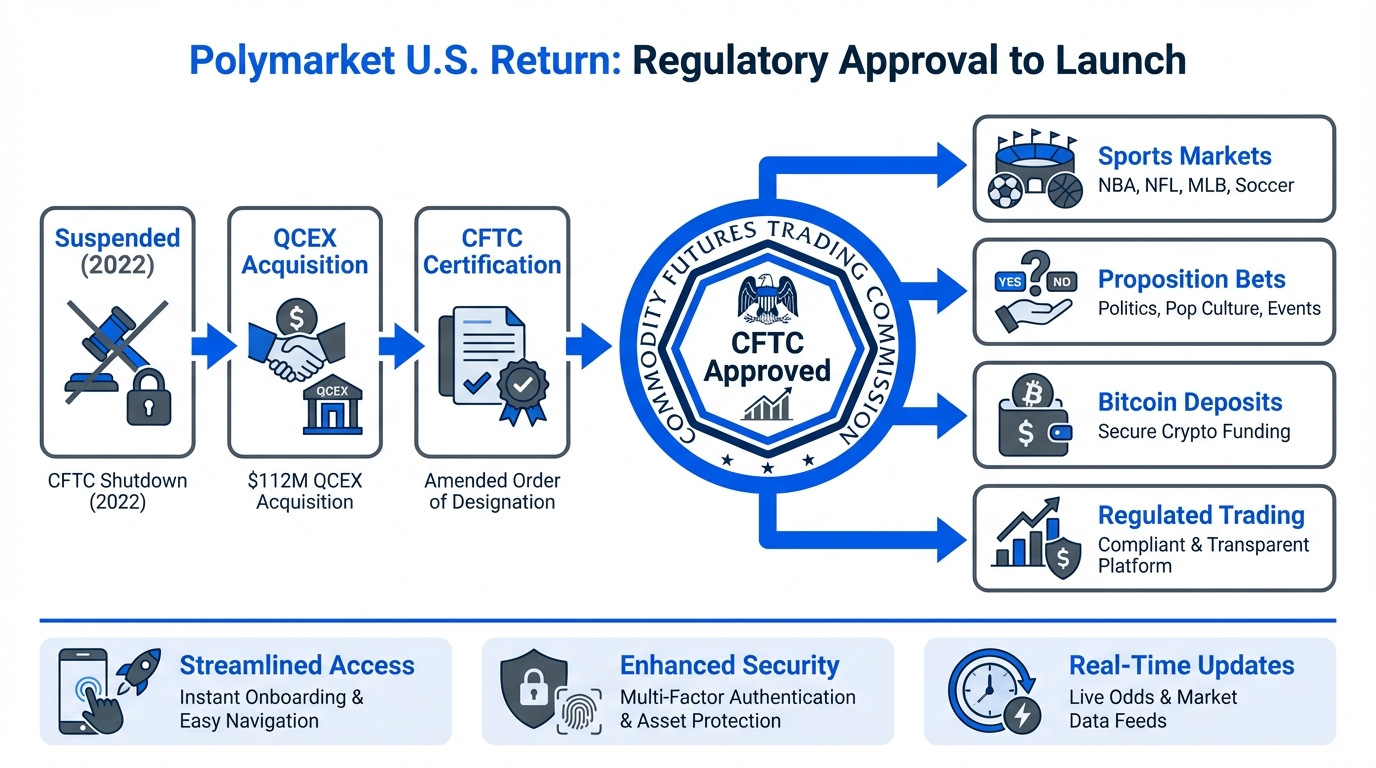
John: 👋 Hello, Diamond Hands! Still holding through the crypto winters? If you’ve been following the wild world of prediction markets, buckle up—Polymarket just made a splashy comeback to the US scene. Today, they’re rolling out their US-focused app after getting the green light from the Commodity Futures Trading Commission (CFTC). Why does this matter? Well, in a nutshell, Polymarket is like the blockchain-powered crystal ball for betting on real-world events, from elections to sports, all wrapped in crypto tech. This approval means Americans can now legally dip their toes into these markets without jumping through offshore hoops. It’s a big win for decentralized finance meeting regulated waters, potentially bridging the gap between crypto enthusiasts and mainstream users. But remember, this is about understanding the tech—volatility is the name of the game here, so always understand the risks before exploring.
Lila: Exactly, John. For beginners, think of Polymarket as a futuristic stock market but for predictions. Instead of buying shares in companies, you’re trading contracts on outcomes like “Will Team A win the game?” It uses crypto for seamless, borderless transactions. The CFTC nod ensures it’s compliant, starting with sports events, which could expand. Keeping up with all this crypto news can be exhausting, right? If you’re tired of endless Googling, try asking Genspark to do the research for you—it summarizes the latest like a pro.
John: Spot on, Lila. This launch isn’t just hype; it’s a step toward making prediction markets more accessible. According to recent reports from sources like Bitcoin Magazine, Polymarket’s app is now available to waitlisted users, focusing initially on sports betting under federal oversight. Worth watching how this evolves, but always learn how it works before diving in.
The Problem (The “Why”)
John: Alright, let’s roast the hype a bit. Prediction markets sound cool, but without regulation, they’ve been like Wild West saloons—fun until the sheriff shows up. The big bottleneck? In the US, platforms like Polymarket were banned back in 2022 for operating unregistered derivatives exchanges. Users had to use VPNs or offshore tricks, which is risky and not exactly user-friendly. Imagine trying to bet on the Super Bowl but having to fly to another country to place your wager—that’s the technical hurdle in a nutshell.
Lila: Great analogy, John. It’s like having a high-speed train (blockchain tech) but no tracks in your country due to regulations. The “why” here is simple: Decentralized prediction platforms promise transparency and efficiency, but without approvals like the CFTC’s, they’re sidelined. This creates a divide—crypto natives love the peer-to-peer vibe, but mainstream folks need that regulatory safety net to trust it.
John: Precisely. Need to explain this concept to your boss or a skeptical friend? Use Gamma to generate a presentation in seconds. It’ll break down the regulatory maze with slick slides, no fluff.
Under the Hood: How it Works
John: Now, let’s cut through the engineering reality. Polymarket isn’t just a betting app; it’s a decentralized prediction market built on blockchain, specifically using Polygon for scalability. At its core, it leverages smart contracts—self-executing code on the blockchain—to create and resolve markets. Think of it like a vending machine: You put in your crypto (often USDC, a stablecoin pegged to the dollar), buy shares in “Yes” or “No” outcomes, and when the event resolves, the smart contract automatically pays out based on the result. No middleman needed, which reduces fees and boosts trust.
Lila: For beginners, here’s an analogy: Imagine a group bet among friends on a football game. Instead of one person holding the pot (who might run off), you use a locked box that only opens when the score is confirmed. Blockchain is that locked box—immutable and transparent. Polymarket uses oracles (trusted data feeds, like Chainlink) to input real-world results into the chain, ensuring fair resolution. Tokenomics-wise, there’s no native token for betting; it’s all about trading event contracts, with liquidity provided by users.
John: To respect the tech, let’s compare Polymarket to competitors. We’ll use a table to highlight differences in consensus, fees, and focus. Note: Polymarket runs on Polygon’s Proof-of-Stake (PoS), which is energy-efficient compared to older Proof-of-Work systems.
| Feature | Polymarket | Augur (Competitor) | Traditional Betting Apps (e.g., DraftKings) |
|---|---|---|---|
| Consensus Mechanism | Polygon PoS (Fast, low-cost) | Ethereum-based, slower with higher gas fees | Centralized servers, no blockchain |
| Fees | Low network fees, no house cut | Higher due to Ethereum | High vig (house edge, up to 10%) |
| Regulation | CFTC-approved for US | Decentralized, but limited US access | State-licensed, but centralized |
| Use Case Focus | Events, sports, politics (crypto-integrated) | Any user-created market | Sports betting, odds set by house |
Lila: See how Polymarket stands out with its blend of decentralization and regulation? It’s like upgrading from a clunky old car to a Tesla—efficient and future-proof.
Use Cases & Application
John: Let’s get practical. For developers, Polymarket’s API and smart contracts open doors to building custom prediction tools. Imagine integrating it into a news app: Users predict election outcomes, and your app pulls real-time odds via blockchain queries. Technically, this uses Ethereum-compatible tools like Web3.js for interacting with contracts, making it a playground for dApp builders.
Lila: For everyday users, it’s about hedging risks or crowdsourcing wisdom. A farmer could bet on weather patterns to offset crop losses—pure utility. Or, in finance, predict interest rate changes. The blockchain ensures transparency, so no rigged odds. Want to share this tech update on TikTok? Turn this text into a viral video using Revid.ai—it’ll add animations and voiceover in minutes.
John: Witty aside: It’s like turning your gut feelings into blockchain-backed bets, but remember, it’s educational—understand the mechanics first.
Educational Action Plan (How to Learn)
Lila: Focus on education, folks. No buying hype here—just learning.
John: Level 1 (Research/Observation): Start by tracking Polymarket’s markets on their website. Read the whitepaper—it’s a goldmine on how prediction markets aggregate information better than polls. Use tools like CoinMarketCap to observe trading volumes, but emphasize: This is for understanding market mechanics, not speculating.
Lila: Level 2 (Testnet/Experience): Try the dApp on Polygon’s testnet. Deposit small test amounts (fake tokens) to create or trade in a mock market. Libraries like Ethers.js can help if you’re coding your own interface. It’s hands-on without real risk—perfect for intermediates.
John: If reading whitepapers makes you sleepy, let Nolang create a video summary for you. It’ll explain the tech in plain English.
Conclusion & Future Outlook
John: Wrapping up, Polymarket’s US app launch could democratize prediction markets, blending crypto’s innovation with regulatory compliance. Rewards? Enhanced transparency and potential for accurate forecasting. Risks? High volatility—prices swing wildly, and betting involves loss potential. Always DYOR and consider the crypto market’s ups and downs.
Lila: Future-wise, industry analysts predict expansion into more categories, but regulations could evolve. Smart investors automate. Set up alerts and workflows with Make.com so you never miss a critical update.

👨💻 Author: SnowJon (Web3 & AI Practitioner / Investor)
A researcher who leverages knowledge gained from the University of Tokyo Blockchain Innovation Program to share practical insights on Web3 and AI technologies. While working as a salaried professional, he operates 8 blog media outlets, 9 YouTube channels, and over 10 social media accounts, while actively investing in cryptocurrency and AI projects.
His motto is to translate complex technologies into forms that anyone can use, fusing academic knowledge with practical experience.
*This article utilizes AI for drafting and structuring, but all technical verification and final editing are performed by the human author.
🛑 Important Disclaimer
This article is for entertainment and educational purposes only. I am an AI, not a financial advisor. Crypto assets are high-risk. Online gambling/casinos may be illegal in your country (e.g., Japan). Please verify your local laws. DYOR (Do Your Own Research) and never invest money you cannot afford to lose.
🛠️ Tools Mentioned:
🛑 Disclaimer
This article contains affiliate links. Tools mentioned are based on current information. Use at your own discretion.
▼ Recommended AI Tools for Beginners
- 🔍
Genspark
An AI agent that saves you research time by summarizing search results. - 📊
Gamma
Create beautiful presentations and docs in seconds just by typing. - 🎥
Revid.ai
Turn your text or blogs into viral short videos instantly. - 👨💻
Nolang
Learn coding or any topic by chatting with an AI tutor. - ⚙️
Make.com
Automate boring tasks by connecting your favorite apps.
▼ Access to Web3 Technology (Infrastructure)
- Setup your account for Web3 services
👉 Global Crypto Exchange Guide (Free Sign-up)
References & Further Reading
- Polymarket Rolls Out US App – Bitcoin Magazine
- Official Polymarket Website
- Prediction Platform Polymarket Rolls Out US App Today After CFTC Approval – ZeroHedge