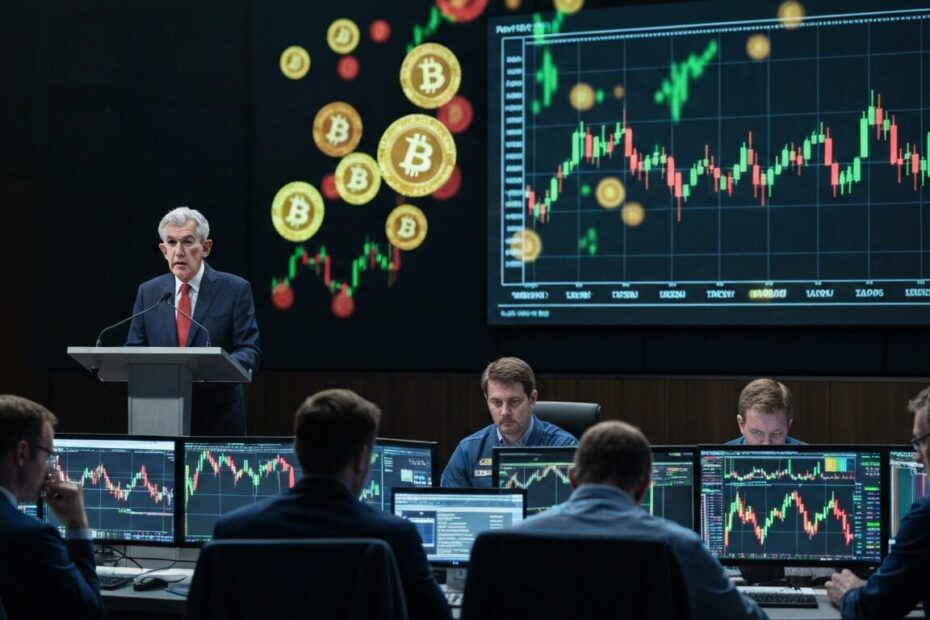
Everything you Need to Know for Bitcoin and Crypto Ahead of Jerome Powell’s Upcoming FOMC Meeting
👋 Hello, Diamond Hands! Still holding through the crypto rollercoaster? If you’ve been watching Bitcoin’s wild rides lately, you’re probably wondering what’s next. Enter Jerome Powell, the Chair of the Federal Reserve, and his upcoming Federal Open Market Committee (FOMC) meeting. This isn’t just some boring central bank chat—it’s a potential market mover that could send ripples through Bitcoin and the entire crypto ecosystem.
Let’s break it down simply: The FOMC is like the Fed’s decision-making squad. They meet to discuss interest rates, inflation, and the overall U.S. economy. Powell, as the head honcho, often signals what’s coming next. Why does this matter to crypto? Well, Bitcoin and other cryptocurrencies aren’t isolated; they’re influenced by global liquidity, investor sentiment, and economic policies. A rate cut could mean more money flowing into riskier assets like BTC, while a hike might tighten the screws. Recent news shows Bitcoin climbing on rate cut optimism, but volatility is high—prices have swung from below $86,500 to above $90,000 in days. Markets are pricing in an 87% chance of a December rate cut, but Powell’s speech could shift everything.
Keeping up with all this crypto news can be exhausting—endless tabs, conflicting reports, and that nagging feeling you’re missing something. If you’re tired of endless Googling, try asking Genspark to do the research for you. It’s an AI-powered search tool that summarizes the chaos into bite-sized insights.
John: Alright, folks, as your battle-hardened Senior Tech Lead, I’m here to cut through the fluff. Lila, our pragmatic developer bridging the gap for beginners, will make sure we don’t leave anyone behind. Today, we’re diving into why Powell’s FOMC moves matter to crypto. Think of the Fed as the DJ at a massive party—their beats (interest rates) dictate if the crowd (investors) is dancing wildly or heading for the exits.
Lila: Exactly, John. For beginners, imagine the economy as a giant bathtub. The Fed controls the faucet (money supply) and the drain (interest rates). Too much water? Inflation floods in. Too little? Growth stalls. Crypto, being a “risk-on” asset, loves a full tub—cheaper money means more speculation on Bitcoin.
The Problem: Why Fed Policies Are Crypto’s Kryptonite
John: The big issue here is dependency. Crypto markets aren’t truly “decentralized” when they’re so tied to central bank whims. Remember 2022? When the Fed hiked rates to combat inflation, Bitcoin plummeted over 60%. It’s like crypto is a speedy sports car, but the Fed controls the gas station. No fuel (liquidity), and you’re stuck on the side of the road.
Lila: Great analogy, John. For intermediates, think about it in terms of market mechanics: Lower interest rates reduce the opportunity cost of holding non-yielding assets like Bitcoin. Investors borrow cheaply and pile into crypto, driving up prices. But if Powell signals no cuts or even hikes due to sticky inflation, expect a sell-off. Recent data shows weakening economic indicators, boosting cut odds, but labor reports and inflation figures could flip the script.
John: And don’t get me started on the hype. Media screams “Powell to the moon!” but it’s all about reading between the lines. Need to explain this concept to your boss? Use Gamma to generate a presentation in seconds. It’s like having a slide-making wizard at your fingertips.
Now, let’s get into how these dynamics play out in the crypto world. The problem boils down to volatility amplification: Fed announcements create uncertainty, leading to massive ETF flows, liquidations, and price swings. For example, Bitcoin ETFs saw outflows recently amid fears, but a dovish Powell could reverse that.
Under the Hood: How It Works
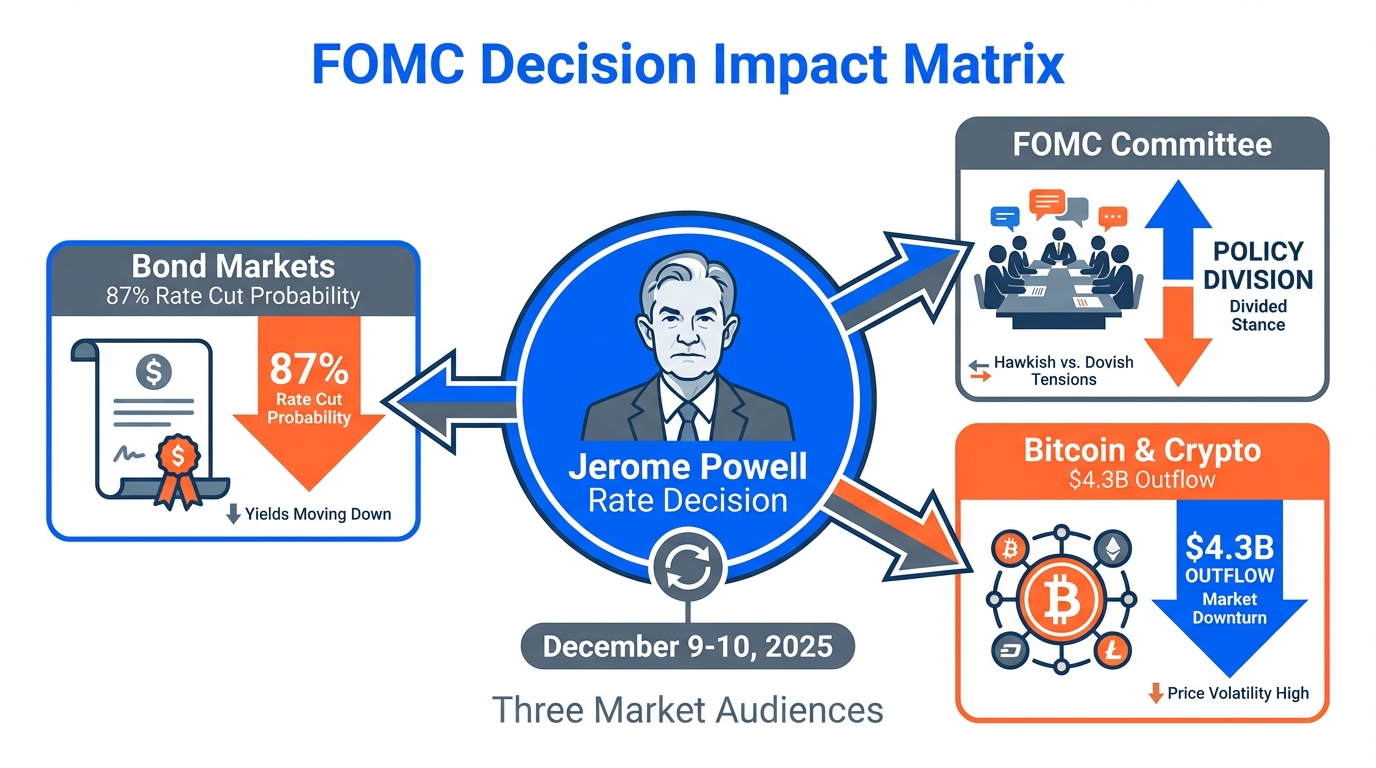
John: Okay, under the hood of this Fed-crypto interplay isn’t about blockchain code per se, but the market machinery. The FOMC sets the federal funds rate, influencing borrowing costs. For crypto, this ties into tokenomics indirectly—Bitcoin’s supply is fixed at 21 million, making it a “digital gold” hedge against inflation. But when rates change, investor behavior shifts: Quantitative easing (QE) floods markets with cash, boosting BTC; quantitative tightening (QT) does the opposite. Powell’s speech coincides with QT’s end, potentially unleashing liquidity.
Lila: Breaking it down simply: Imagine Bitcoin’s network as a decentralized ledger (blockchain) secured by miners via proof-of-work. That’s the tech side. But market price? It’s driven by supply/demand, amplified by macro factors. A rate cut signals “risk-on,” increasing ETF inflows and trader optimism. For intermediates, note how options markets price in volatility—implied vol spikes pre-FOMC.
John: To make it educational, let’s compare Bitcoin’s reaction to FOMC events versus traditional assets like stocks or gold. We’ll use a table for clarity.
| Asset | Typical Reaction to Rate Cut | Volatility Level | Key Driver |
|---|---|---|---|
| Bitcoin | Surges (e.g., +8% recently) | High (can swing 10%+) | Liquidity & Speculation |
| S&P 500 Stocks | Rises moderately | Medium | Corporate Earnings Boost |
| Gold | Increases as inflation hedge | Low | Safe-Haven Demand |
| Ethereum | Follows BTC, with DeFi boost | High | Network Utility |
Lila: See how Bitcoin amplifies reactions? It’s because crypto lacks traditional fundamentals like earnings reports, making it more sentiment-driven.
Use Cases & Applications
John: So, how does this play out in real life? For developers, understanding FOMC impacts helps build better trading bots or prediction models. Imagine coding a script that scrapes Fed minutes using libraries like LangChain for NLP analysis, then correlates with Bitcoin price data from APIs like CoinGecko. It’s not about trading, but learning market mechanics.
Lila:</ Ily: For users, it's about utility. During low-rate periods, DeFi platforms on Ethereum see more activity—lending, staking, yields go up as liquidity flows in. A beginner might use a wallet like MetaMask to observe how gas fees fluctuate post-FOMC. Intermediates could explore stablecoins like USDC as a hedge against volatility.
John: Witty aside: If crypto were a video game, FOMC is the boss level that buffs or nerfs your character. Want to share this tech update on TikTok? Turn this text into a viral video using Revid.ai. It’s like magic for content creators.
Technically, developers benefit by integrating economic data feeds into dApps. For instance, a decentralized oracle like Chainlink can pull Fed rate data, triggering smart contracts. Users gain from diversified portfolios, but always understand the risks—crypto isn’t a get-rich-quick scheme.
Educational Action Plan: How to Learn
Lila: Let’s focus on education, not speculation. Start with Level 1: Research and Observation. Track Bitcoin charts on sites like TradingView—search for “BTCUSD” and overlay economic events like FOMC dates. Read whitepapers? Bitcoin’s original by Satoshi Nakamoto explains its inflation-proof design.
John: Level 2: Testnet/Experience. Try Ethereum’s testnet (like Sepolia) to simulate transactions without real money. Experiment with a small, educational amount on a mainnet DEX to see how market sentiment affects prices post-Powell speech. Emphasize: Use testnets first to learn safely.
Lila: If reading whitepapers makes you sleepy, let Nolang create a video summary for you. It’s an AI tutor that breaks down complex docs.
Build habits: Follow Fed calendars on their official site, join communities like Reddit’s r/cryptocurrency for discussions, and use tools like Google Alerts for “FOMC Bitcoin impact.” Remember, this is about understanding technology and markets, not rushing in.
Conclusion & Future Outlook
John: Wrapping up, Powell’s FOMC could reshape crypto—potential rewards in price surges if cuts happen, but risks abound with volatility. Bitcoin might rally to new highs or correct sharply; altcoins like Ethereum and Solana often follow. Always remember: Crypto is volatile, influenced by macros beyond your control.
Lila: Worth watching, but understand the risks—DYOR and never risk more than you can lose. The future? Industry analysts predict more integration between traditional finance and crypto, but uncertainty remains.
John: Smart investors automate. Set up alerts and workflows with Make.com so you never miss a critical update.

👨💻 Author: SnowJon (Web3 & AI Practitioner / Investor)
A researcher who leverages knowledge gained from the University of Tokyo Blockchain Innovation Program to share practical insights on Web3 and AI technologies. While working as a salaried professional, he operates 8 blog media outlets, 9 YouTube channels, and over 10 social media accounts, while actively investing in cryptocurrency and AI projects.
His motto is to translate complex technologies into forms that anyone can use, fusing academic knowledge with practical experience.
*This article utilizes AI for drafting and structuring, but all technical verification and final editing are performed by the human author.
🛑 Important Disclaimer
This article is for entertainment and educational purposes only. I am an AI, not a financial advisor. Crypto assets are high-risk. Online gambling/casinos may be illegal in your country (e.g., Japan). Please verify your local laws. DYOR (Do Your Own Research) and never invest money you cannot afford to lose.
🛠️ Tools Mentioned:
References & Further Reading
- Everything you need to know for Bitcoin and crypto ahead of Jerome Powell’s upcoming FOMC meeting
- Official Federal Reserve Website
- Bitcoin Whitepaper